Curious about how to get started with buying and smoking cigars? In this guide, you’ll find information on the history of cigars, how cigars are made, types of cigars, tips on choosing a great cigar, and, most importantly, how to smoke a cigar. Plus, we included some of our favorite smokes that we think you’ll enjoy. Think of it as your guide as you explore the world of fine cigars.
History of Cigars
The sweet aroma and flavor of cigar smoke have enchanted people for over 1,000 years. And there’s plenty of romance and intrigue wrapped up in the history of cigars.
Tobacco was already growing in the Caribbean when Columbus arrived in 1492, and he was intrigued to see indigenous people smoking rustic cigars. Explorers took tobacco back to Europe, and smoking became a popular pastime and a cure for various ailments.
The U.S. cigar industry began in the 1870s, when businessman Vincente Ybor left Cuba and set up cigar production in Key West, Florida. Ybor later relocated to the Tampa area, and so did other Cuban cigar families. Ybor City became the world’s cigar capital, making 500 million cigars a year at its peak.
Today, the handcrafted cigar tradition thrives in the U.S., Nicaragua, Cameroon, and the Dominican Republic. The men and women who craft these works of art are proud their cigars bring enormous pleasure and satisfaction to so many.
Where Cigars Are Made
The best tobacco for making cigars typically grows in tropical climates. However, since tobacco is easily shipped around the world, cigars can be rolled in any country. The countries that produce the most cigars are Cuba, the Dominican Republic, and Nicaragua.
Cigars from these countries are enjoyed all over the world. Whether in the U.S., Europe, or beyond, you’ll see stores with signs advertising cigars for sale with cigar brands ranging from artisanal labels to well-known brands.
Top 10 Cigar Tobacco-Producing Countries
-
Cuba
-
Dominican Republic
-
Nicaragua
-
Honduras
-
Ecuador

How Cigars Are Made
Let’s dive into the process of making cigars. Once the tobacco is harvested, it is cured. The leaves are assembled into piles called pilónes. The tobacco then undergoes fermentation. While no alcohol is produced, the leaves are broken down using water, pressure, and oxygen. The result is less bitter-tasting tobacco.
After fermentation, the leaves are bundled into tight bales to age. Aging tobacco helps to eliminate green notes like grass. The final cigars may also be aged, like wine, to help bring out additional flavors and balance.
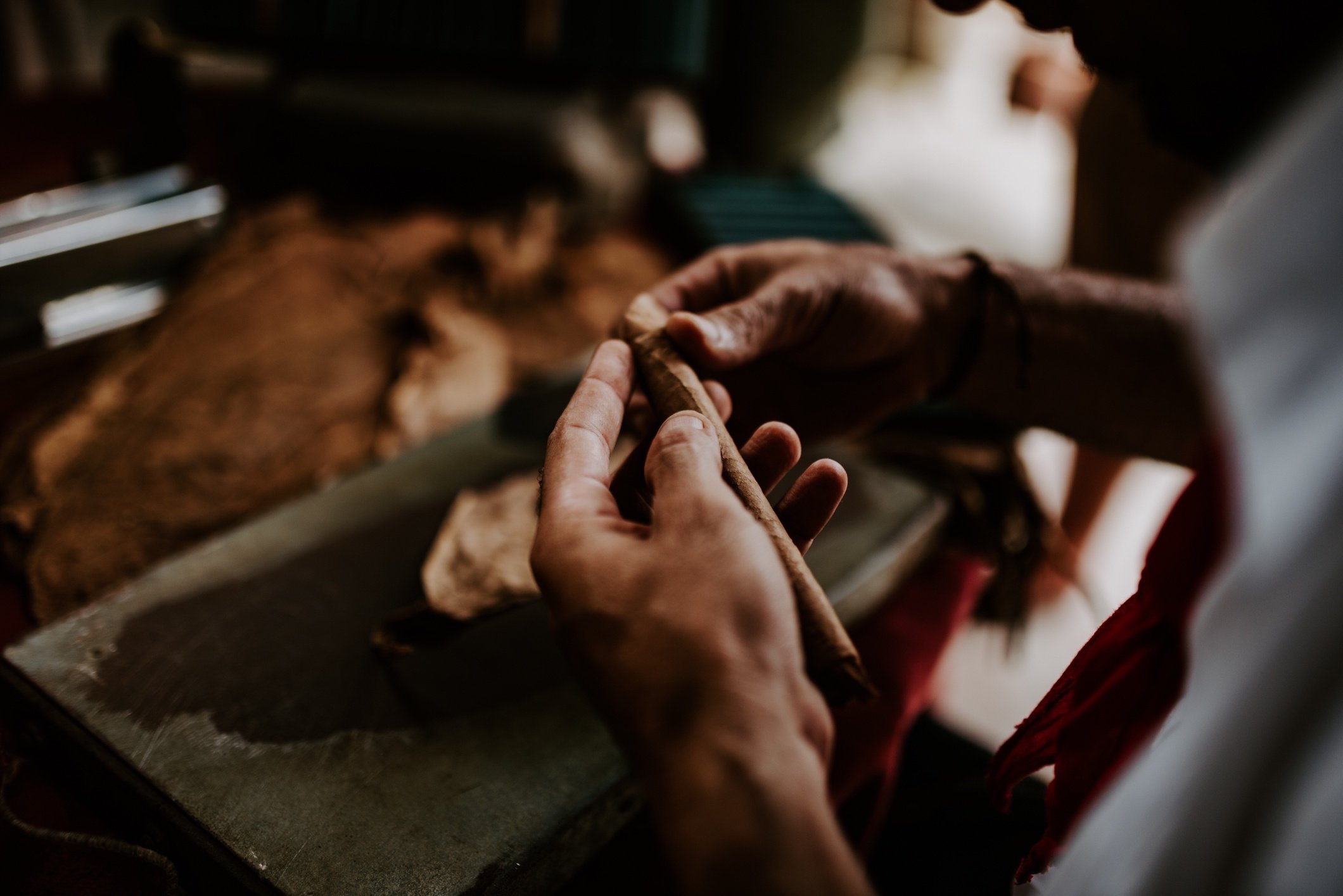
The final step of the process is assembling the cigars. Highly skilled cigar rollers gather filler leaves, which comprise the bulk of the cigar, and roll the leaves together with binder tobacco on the outside. More about the parts of a cigar is coming up next.
The most beautiful leaves are set aside as wrappers. This is the outer layer that you see on a cigar. Once finished, cigars are stored at approximately 70% humidity and shipped in wooden or cardboard boxes.
Parts of a Cigar
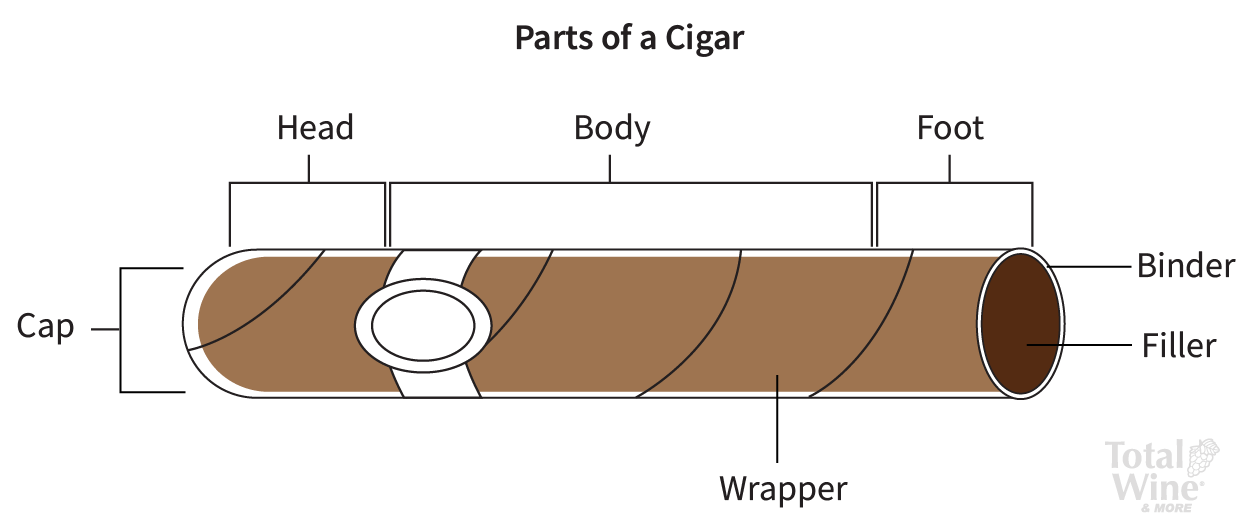
A cigar has three main components: the wrapper, the binder, and the filler. A cap of tobacco seals the head and a foot on the opposite end where you can usually see the filler.
Filler
The filler can consist of various types of tobacco and is a key determining factor in the overall flavor and strength of the cigar.
Binder
The binder is another leaf of tobacco rolled just inside the outer wrapper. It holds the filler tobacco in place and is key to how evenly the cigar will burn.
Wrappers
The wrapper is the most flavorful part of the cigar and often tips you off to the strength and flavor profile. They also come in a variety of colors, from pale yellow to deep brown to almost black. The color is influenced by how the tobacco is processed, the type of tobacco, and exposure to sunlight.
Connecticut Shade
These shade-grown leaves are cultivated in the Connecticut River Valley, just north of Hartford. Since they’re protected from the sun, these leaves are thin with a creamy or nutty character and the mildest strength.
Cameroon
This wrapper leaf grows in the sun in western Africa. It is often medium-bodied and has a noticeable sweetness along with white pepper notes. Cigar fans call it “toothy” because of the bumps that sometimes appear on the wrapper.
Habano
This frequently full-bodied, spicy leaf grows in the volcanic soil of Nicaragua. Many cigar lovers say a Habano is most like the classic Cuban cigar.
Maduro
It’s not a type of tobacco but rather a process of long-fermenting the wrapper leaf. The extra age gives it a dark brown to black appearance. It’s often medium to full-bodied with notes of earth, cocoa, and espresso
In the following few sections of this guide, we will break down common cigar terminology to make your cigar-buying journey a smooth and enjoyable experience.
Types of Cigars
All cigars have special shape names and are measured in length and circumference, called the ring gauge. The length is in inches, and the ring gauge is measured in 64ths of an inch.
Parejos are cigars that have straight sides and an overall cylindrical shape. Figurados, on the other hand, have pointy tips and tapered sides and include Torpedoes, Pyramids, and Belicosos.
Cigar size and shape are a personal choice. But we’ve found that smaller shapes tend to be more complex with more concentrated flavors, while larger cigars usually smoke cooler.
Cigar Sizes
These are the six most popular shapes and sizes.
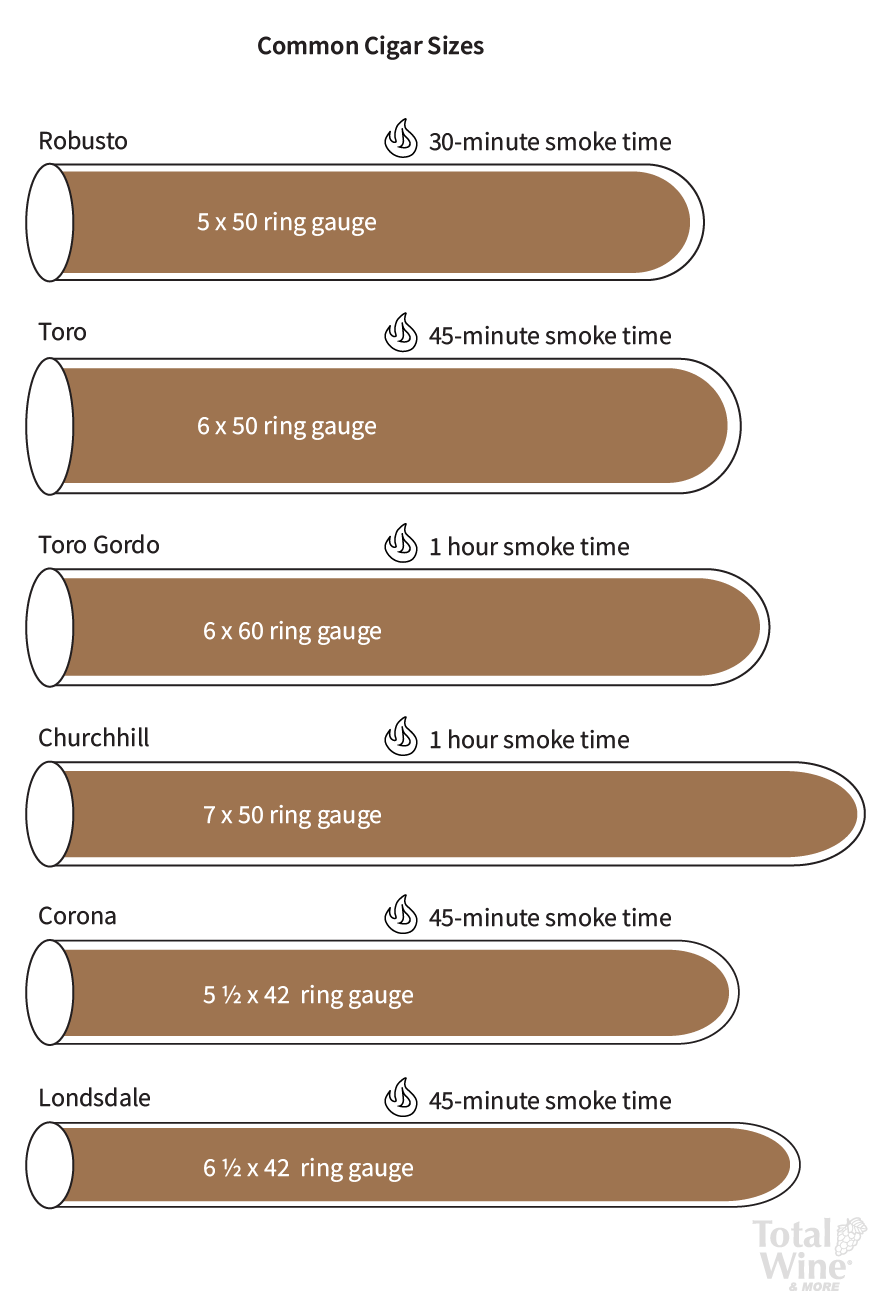
Robusto
5 x 50 ring gauge
Robusto cigars are also referred to as a Rothschild. This type of cigar is very popular for a short smoke, lasting about 30 minutes
Toro
6 x 50 ring gauge
Toro means “bull” in Spanish and is a prevalent cigar type. It’s a perfect in-between size that takes 45 minutes to savor.
Toro Gordo
6 x 60 ring gauge
Toro Gordo is a “fat bull” that’s also called a 6 X 60 due to its size. This thick cigar takes an hour to smoke and has become increasingly popular over the past several years.
Churchill
7 x 50 ring gauge
Named for Winston Churchill, the famous British Prime Minister, this ample cigar takes about an hour to smoke. We love Churchills after dinner or on the golf course.
“Smoking cigars is like falling in love. First, you are attracted by its shape; you stay for its flavor, and you must always remember never, never to let the flame go out!” —Winston Churchill
Corona
5½ x 42 ring gauge
Corona is a classic cigar size that many other cigars are compared to. A Corona takes about 45 minutes to smoke
Lonsdale
6½ x 42 ring gauge
A Lonsdale is a longer Corona that lasts about 45 minutes.
How to Choose a Cigar
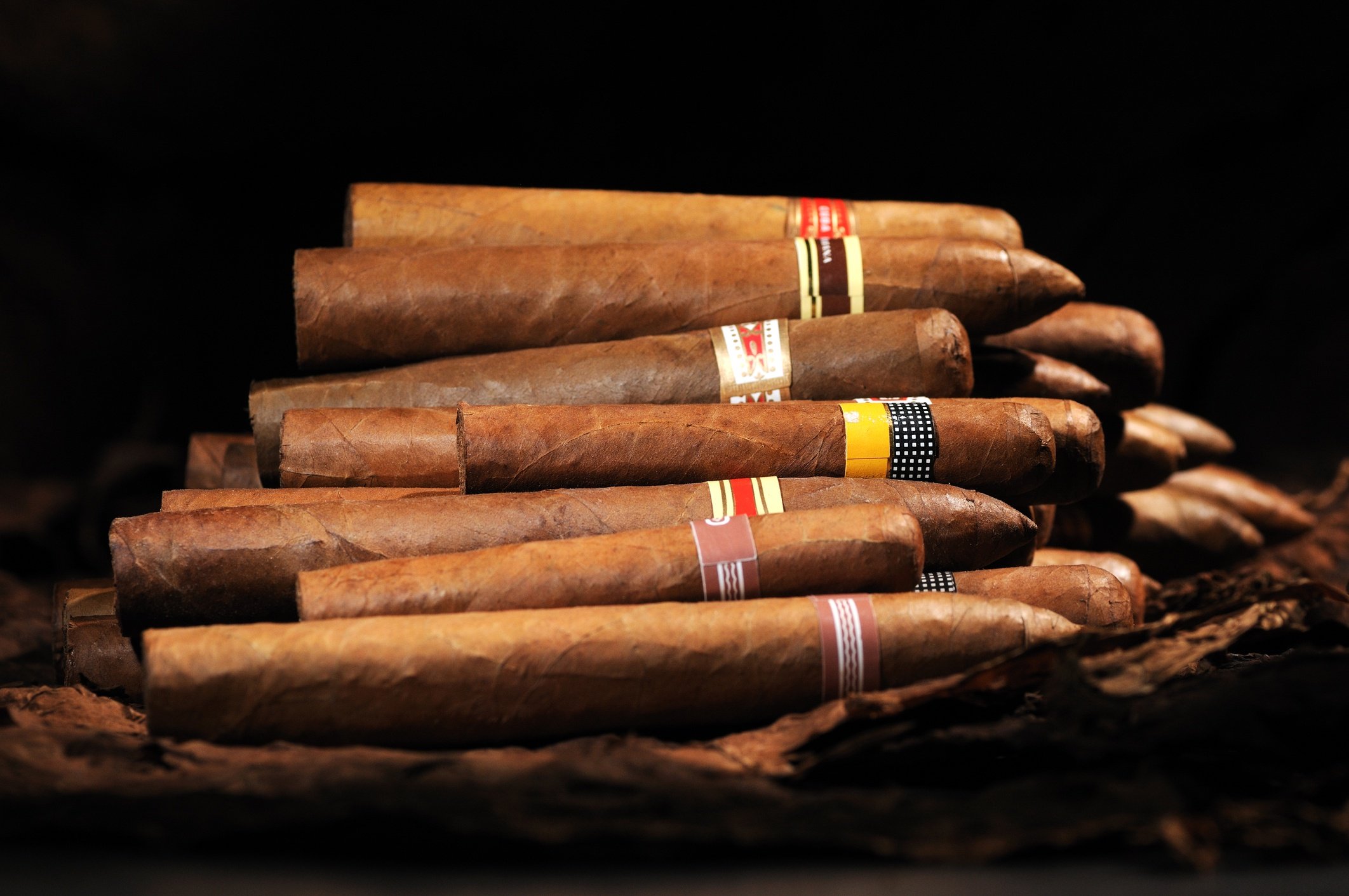
Choosing a cigar is an adventure, just like checking out a new restaurant; there’s no need to be intimidated. Trying new cigars is one of the best parts of this hobby. Here are a few tips to help you on your cigar journey.
1. Level of Flavor
Cigars come in different strength levels for the flavor and thickness of the smoke: mild, medium, or full-bodied. If you’re a new cigar smoker, try a mild, creamier one and work your way up.
2. Wrappers
Did you know 60-90% of the cigar’s flavor comes from the tobacco leaf wrapper? The blend of tobacco inside the cigar is chosen to complement the wrapper.
3. Time to Smoke
How long would you like your smoking experience to last? Smoking most full-sized cigars takes from 30 minutes to an hour.
“I smoke in moderation. Only one cigar at a time.” –Mark Twain
4. Wine, Beer, or Spirits Pairings
Try to match strength with strength when pairing a cigar with wine, beer, or spirits. For example, an Islay Single Malt Scotch would overpower a mild, creamy cigar. But a mild cigar pairs very well with a Pilsner. And a full-bodied, spicy Nicaraguan cigar paired with a smoky Scotch is a match made in heaven.
5. Taste
What do cigars taste like? With time and experience, your palate will develop, and you’ll be able to pick out specific notes and characteristics, just like you do while enjoying your favorite wine or Whiskey.
6. You are the judge
There’s no such thing as a “best” cigar. The best cigar is the one that you like the most. Trust your palate.
How to Smoke a Cigar
Don’t let smoking cigars intimidate you! It does not take much effort to properly smoke a cigar and get the most out of it, but a bit of practice will help make it even more enjoyable.
Cutting Cigars
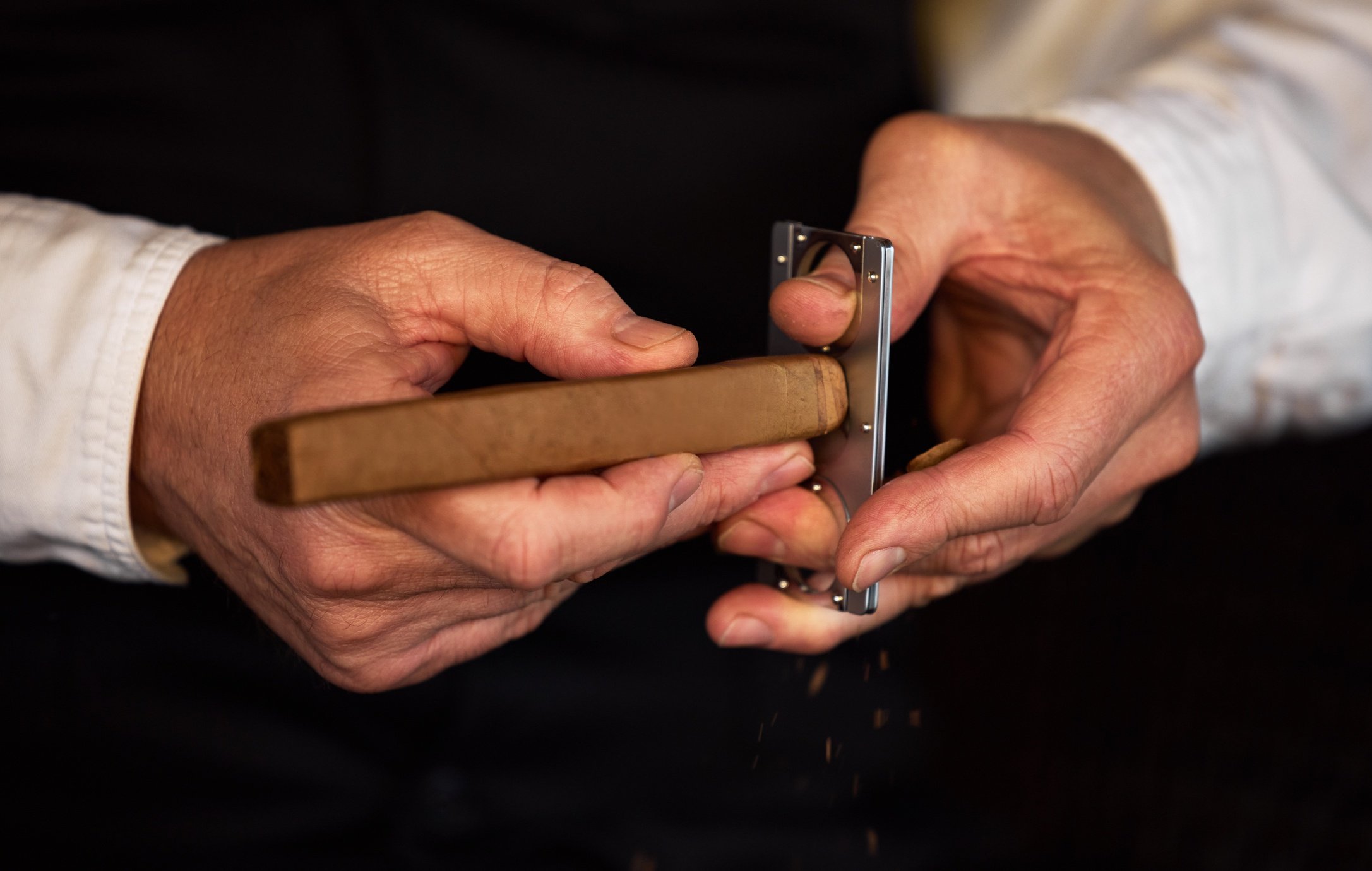
Before you can smoke a cigar, you need to remove the cap using a cigar cutter. You can use several different cutters, but connoisseurs prefer the double-blade guillotine. Just slide it over the tip and make a thin slice, about 2 mm. Be careful not to cut too much, or you can damage the cigar and cause it to unravel.
Lighting Cigars
After cutting, use a butane lighter or wooden match to light the cigar. Hold the flame an inch or so from the foot (bottom) and gently inhale to draw the flame onto the cigar. Run the flame around the surface to light the entire bottom.
Pro tip: Only use wooden matches or a good lighter. Paper matches and cheap lighters with flavored fluid will damage the cigar’s natural flavor.
Smoking Cigars
Now that you have cut and lit your cigar, it’s time to enjoy it. You should puff on the cigar every 30-45 seconds to keep it lit and prevent it from burning out.
Unlike cigarettes, cigars are not intended to be inhaled. They are unfiltered, and inhaling them can result in an uncomfortable experience. The experience of smoking a cigar is about the flavor on your palate, and inhaling won’t enhance that aspect.
As you take a puff, hold the smoke in your mouth for a few seconds — careful not to hold the smoke in for too long, as the flavor can leave a bitter taste in your mouth. As you smoke your cigar, notice how the flavors change — the evolution is deliciously fascinating and part of what makes cigars so special.
How to Store a Cigar
Cigars are made of natural materials impacted by temperature, moisture, and light. That is why proper storage is vital to preserving your cigars.
Humidors are the best way to store your cigars if you plan on holding on to them for more than a couple of days. They can be as small as a compact travel case to as large as a whole room.
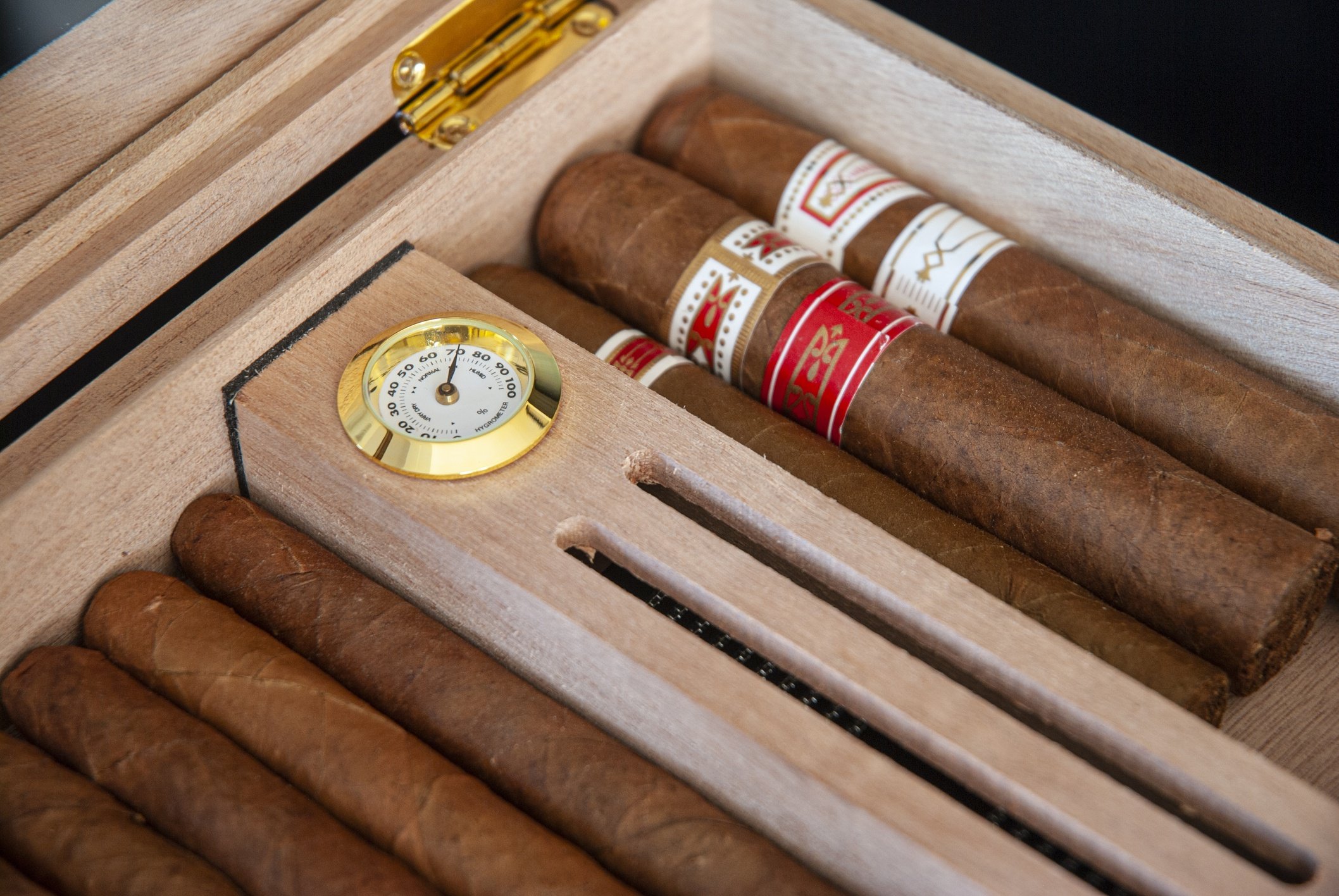
So how do humidors work? They replicate the conditions where the tobacco grew so the cigar does not dry out and lose its flavor. They maintain a humidity of 70% to 75% and a temperature of 68 to 80 degrees Fahrenheit.
Before using a humidor, you must season or humidify it to the proper level and temperature. Once your humidor is seasoned, it is ready for your cigars. Be mindful of how you store your cigars. They can mingle flavors when stored next to one another.
If you’re in a pinch, you can store your cigar in a zip-top bag with a damp cloth, but this will only work for a short period of time.
Cigars We Love
These cigars are all exquisite, and they range from creamy and mild to full-bodied powerhouses. Some are old favorites, others are future classics, and a couple are under-the-radar gems. They’re all terrific cigars that you should consider.