Call it the Champagne paradox: almost everybody wants to drink the iconic sparkling wine. But when it’s time to open a new bottle of Champagne, have you noticed how people will cringe and step back? Opening a bottle of sparkling wine with a cork that can come flying out at 50 miles per hour can make people nervous.
 Making sure your bottle of Champagne is very cold before you even consider uncorking is the best way to prevent an injury. The cold lowers the pressure inside the bottle so you can open it safely.
Combine an icy bottle with the proper technique for opening a bottle, and you’ll never have to worry about spilling a drop or showering your guests in Champagne.
How cold should Champagne be? Chill it down to 47 to 50 degrees Fahrenheit. Submerging the bottle in an ice bucket filled with ice and a little water is one of the best ways to ice down your bottle of Champagne. Or you can place it in the coolest part of the refrigerator for a couple of hours. Condensation will form on the outside of the bottle when you take it out of the fridge.
The best way to open a bottle of Champagne
Before opening your cold bottle of Champagne, have a tea towel or cloth napkin and your serving glasses handy.
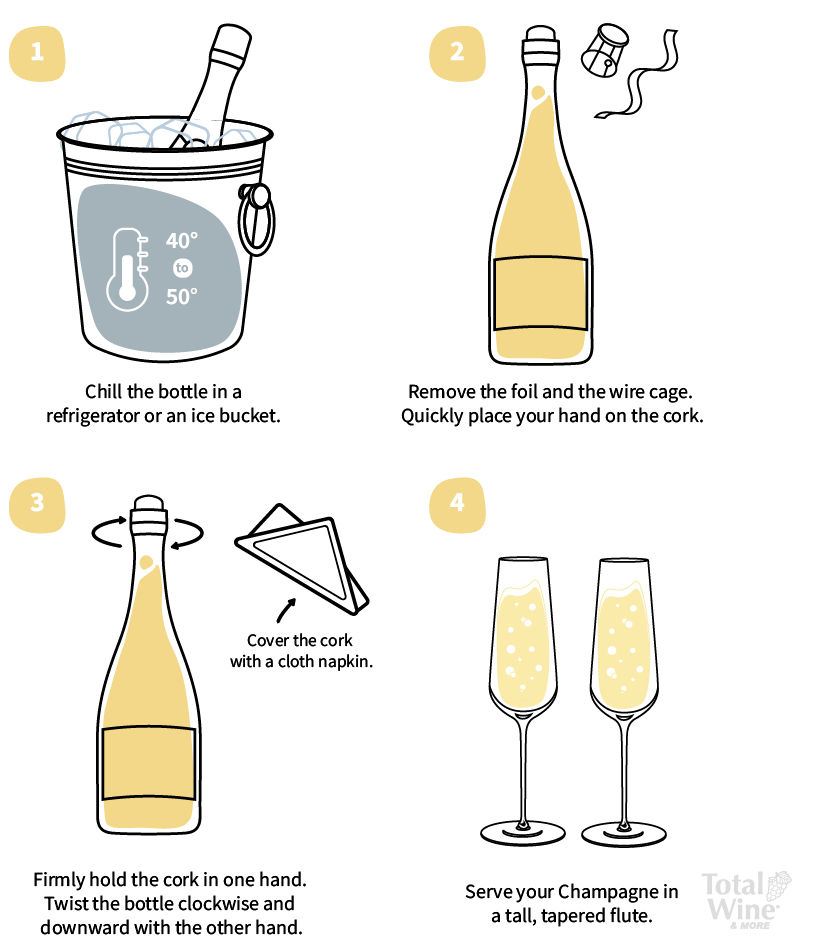
- Make sure the bottle is well-chilled. You can chill it in a refrigerator or an ice bucket filled with ice and a little water for an hour until it’s 40 to 50 degrees Fahrenheit.
- Remove the foil.
- Pull down the little handle on the wire cage and twist it six times to open, then remove the wire cage and quickly cover the cork with your hand.
- Cover the naked cork with a cloth napkin, and then place your hand on top. Be sure the cork isn’t pointed at you or anyone else.
- Firmly grip the cork with one hand and the base of the bottle with the other. Twist the bottle clockwise and down, away from the cork.
- If it’s properly chilled, you should hear a soft sigh when the cork exits the bottle — a “ssss” sound, not “PFFT!”.
- Now pour that Champagne into a tall, tapered flute and enjoy!
Types of Champagne glasses
The glass you use for sipping Champagne is a personal choice, but some are better than others for showcasing the bubbles or the aromas. Here are some popular styles of Champagne glassware:
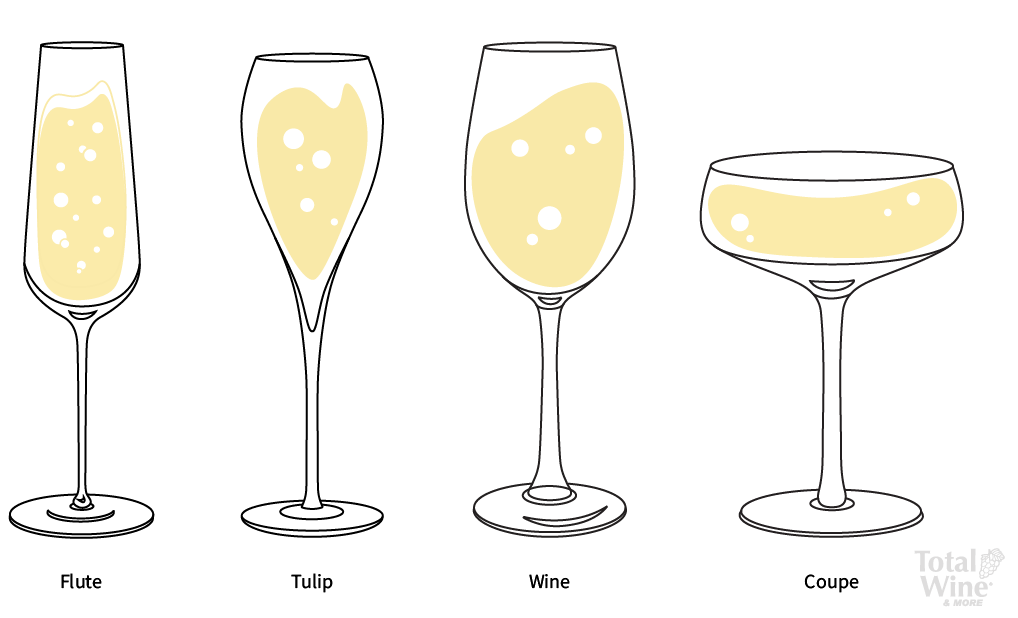
Flute
This tall skinny glass is the classic choice for enjoying a glass of bubbly. The shape allows long streams of bubbles to rise.
Tulip
This type of flute has a bulb at the top, and it’s ideal for bubble-watching. Some tulips with large heads can be top-heavy, so handle with care.
Coupe
Legend has it this glass was molded from the breast of Madame de Pompadour, the cultured, Champagne-loving mistress of Louis XV. This shallow glass was fashionable from the 1930s through the 1970s. You’ve probably seen them piled high to make a tower that’s filled from the top, so the Champagne cascades down, filling the glasses. The only downside of the stylish coupe is that it’s shallow, so the bubbles tend to splash about. And you’re mingling at a party, take care not to spill as you walk.
Wine glass
Champagne is a white wine, so many connoisseurs sip it from a white wine glass. For a mind-blowing experience, drink your Champagne from Burgundy glass, and revel in the intense, glorious aromas.
Whichever Champagne glass you choose, be sure to hold it by the stem so your hand doesn’t warm up the wine.
Champagne bottle sizes
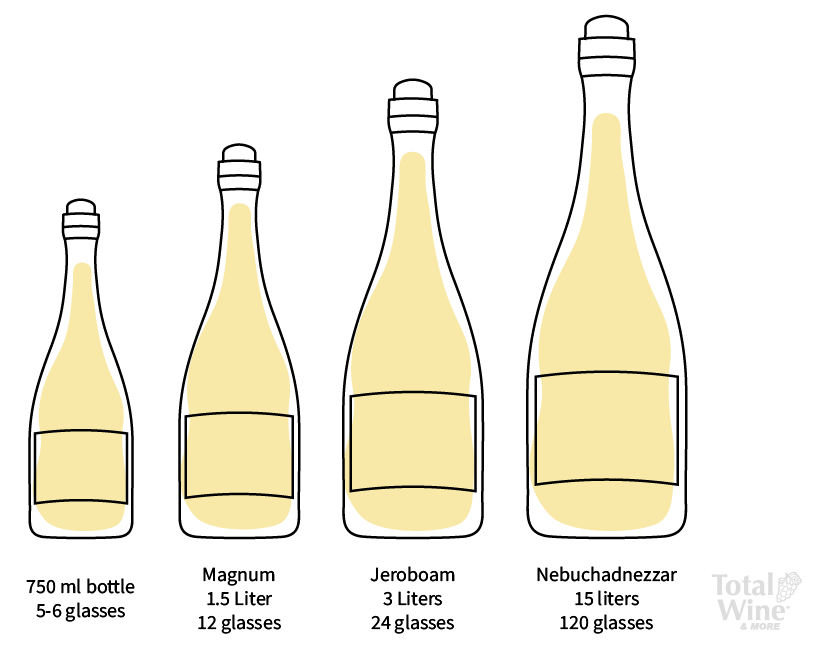
Trying to figure out how much Champagne you need for your dinner or event? Champagne bottles come in an impressive range of sizes, so no matter the size of your party, there’s a bottle that’s just right. A standard 750 ml bottle of champagne holds 25 ounces, which is enough for five to six modest glasses.
If you’re looking to serve a larger group with style, consider a magnum, a 1.5 Liter bottle. Magnums are always impressive, and they can fill 12 glasses. There’s a sommelier joke that a magnum of champagne is just right… if you’re sipping solo.
The next size up, the Jeroboam, holds 3 liters, or 24 glasses of Champagne. This size is sometimes called a double magnum. The largest commonly available Champagne bottle is the Nebuchadnezzar, which holds 15 liters or 120 glasses of bubbly.
Sabering Champagne
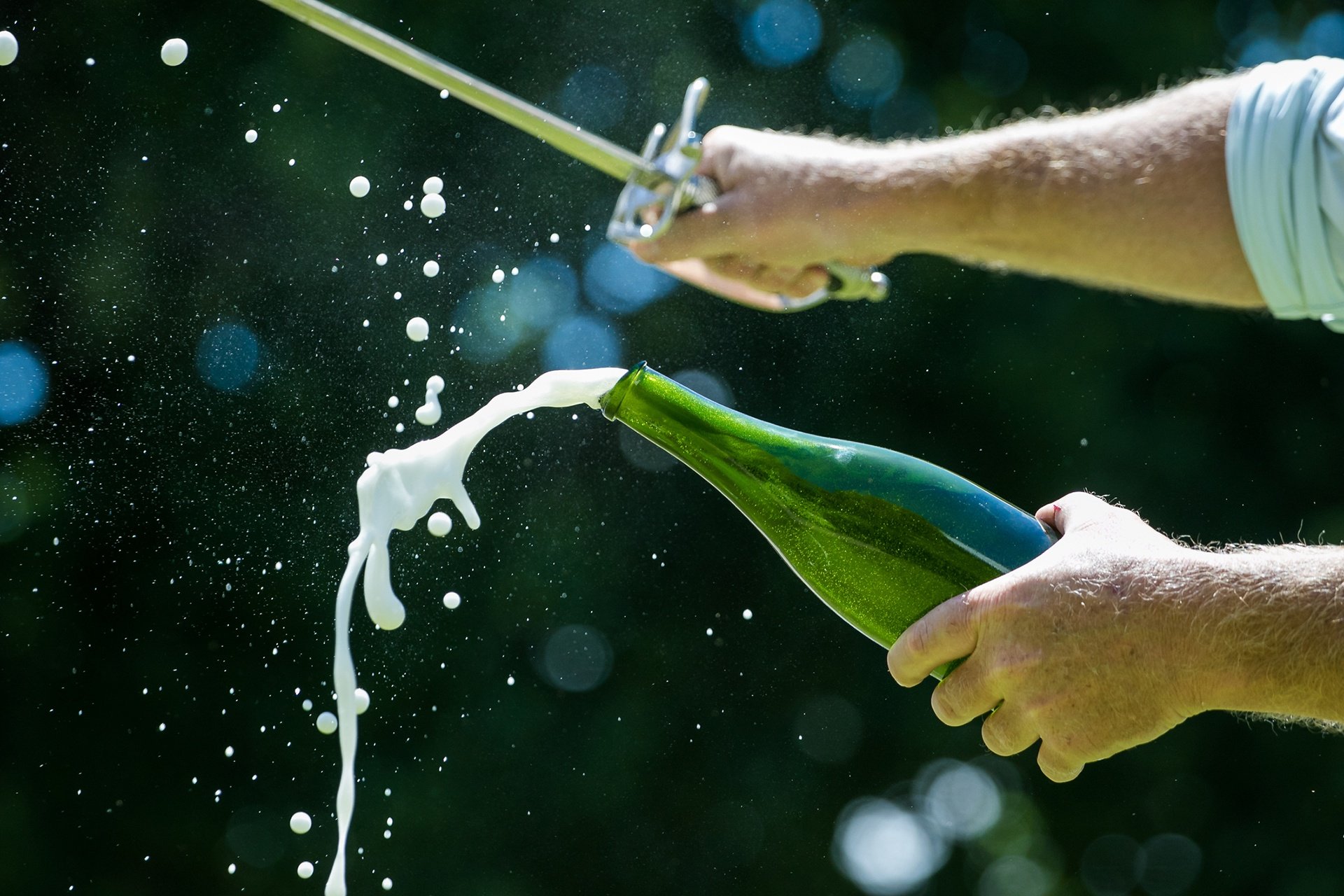
Sabering is the art of lopping off the head of a bottle of Champagne with a saber or the back of a kitchen blade. No one knows who did this first, but sabering is associated with French emperor Napoleon Bonaparte, famous for his love of Champagne. He once declared: “Champagne! In victory one deserves it, in defeat one needs it.”
Elated on the field of battle, or perhaps lamenting a loss, the soldiers used their sabers to slice the heads off Champagne bottles and pour from the cut. In one historical tale, townspeople tossed bottles of Champagne to Napoleon’s victorious Hussar soldiers. They supposedly sliced off the heads of the bottles since uncorking Champagne the traditional way is challenging when you’re on horseback.
Today, sommeliers and Champagne lovers with a sense of style might saber a Champagne bottle at an outdoor event.
How to store opened Champagne
Keep Champagne in a cool dark place away from a lot of movement and vibrations, which can damage the wine over time. Laying bottles down on their side keeps the cork moist so that the wine will be preserved better over time.
If you don’t finish the entire bottle of Champagne, no worries –you can make the effervescence last one more day. The bubbles in Champagne will push a regular wine stopper or cork right out of the bottle. You’ll need a special Champagne stopper, which has arms that grip the neck of the bottle, to trap the bubbles inside.
Looking to explore more about Champagne and sparkling wines from around the world? Check out our Guide to Champagne and Sparkling Wine.