What is a grapevine?
A grapevine is a woody vining plant that grows grapes. The variety of grapes includes table grapes like green Thompson Seedless and Red Flame grapes. But the grapevines that produce your favorite wines like Merlot and Sauvignon Blanc are in a particular wine grape family called Vitis vinifera (Latin for common grapevine).
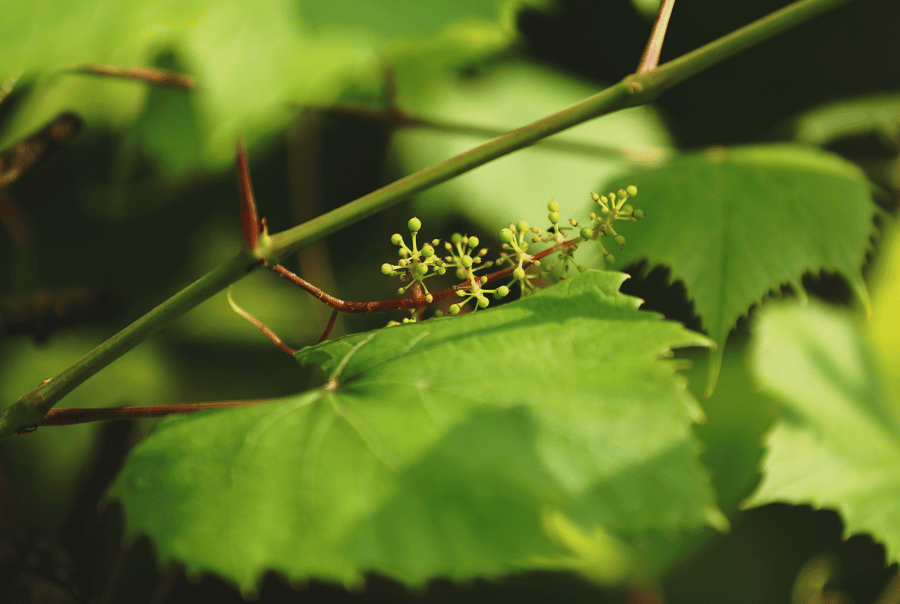
Grapevines have a yearly cycle: putting out buds in the spring, sprouting leaves, producing fruit, and ripening that fruit in time for harvest in the fall. Vineyard managers have various techniques including trellising and pruning wine grapevines to increase the yield and improve fruit quality.
Some grapevines have a hardy and disease-resistant rootstock, and the fruiting part grafted on that determines what kind of fruit the vine produces. Most grapevines start bearing usable fruit after three years and are considered productive until they’re 25 when the yield declines.
How do wine vines grow?
Wine grapevines are deciduous perennial plants, meaning they go through a cycle of sprouting leaves, producing fruit, and dying back each winter. Here’s a rundown on what you’ll see happening with a grapevine, depending on when you visit the vineyard.
Winter
When you visit a vineyard in wintertime, the vines look dead. Vineyard crews have trimmed the shoots and leaves off the vine. But the vines are just resting and gathering strength for the new growing season. In late winter, pinkish bumps appear on the shaggy brown bark. Those bumps will start to swell as spring approaches. The big concern is freezing rain or frost that could damage the new shoots.
Spring
Everyone in wine country eagerly awaits bud break in early spring, when tiny green leaves burst out of those bumps. In 10 days, the leaves start growing quickly, and slender green tendrils that will become vines emerge.
In late spring, about six to 13 weeks after bud break, the vine starts to flower with little bright apple green bursts. The petals of these flowers are closed, but they look like tiny grape clusters.
Summer
Once the tiny grape flowers bloom, they’re pollinated by bees. A good grape harvest depends on successful pollination. Vineyard managers pray that the pollinated flowers start forming grapes before being damaged by wind, rain, or hail. Bad weather also can cause the clusters to grow unevenly, with grapes next to dud flowers that don’t develop.
The grapes grow larger over the summer. The vine is growing leaves, and vineyard managers may remove some leaves so the grape clusters have enough sun to ripen and airflow to keep mold from occurring. They also might drop (cut off) some grape clusters to ensure the vine can ripen fruit successfully.
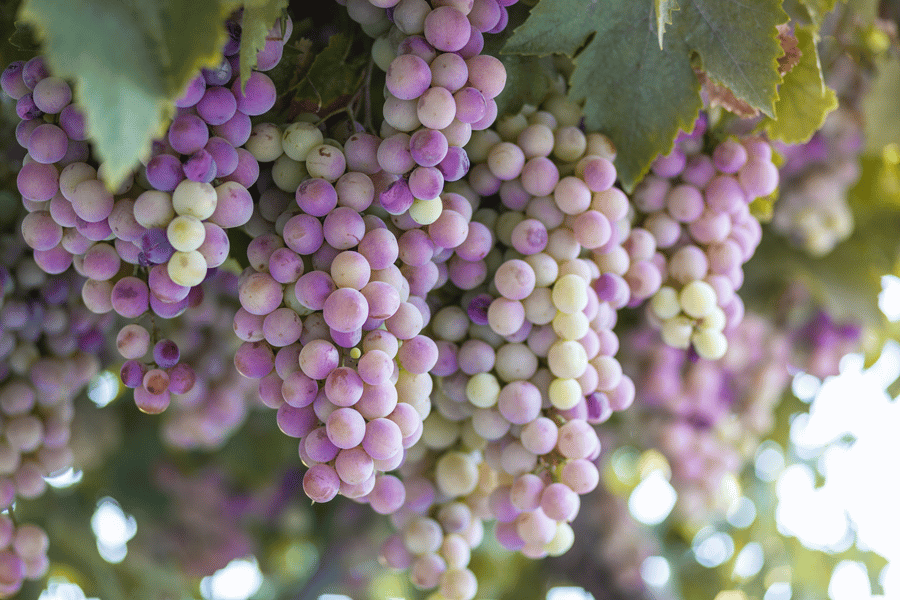
In late summer, a magical event called veraison occurs. The hard, green grape clusters turn purple or gold, and the grapes get sweet and juicy.
Fall
Vineyard teams test the grapes to check the sugar level, called brix. They’ll harvest when the physical maturity of the seeds and stems is in balance with the sugars and acidity in the grapes.
The next time you go on a vineyard tour at a winery, you’ll impress everyone with your knowledge of the grapevine’s lifecycle.
How do you train a grapevine?
When you’re exploring wine country, you may notice that the grapevines are growing in different shapes and styles. Some look wild and untamed, while others are neatly trellised and growing in symmetry.
Each winery makes decisions on how to train its vines depending on the location of the vineyard and the varietal. They also have to decide whether they want to maximize or minimize sun exposure and how far apart the vines should be to thrive.
There are a few basic systems for training vines and lots of variations, depending on the winery’s preference.
Head-pruned or bush system
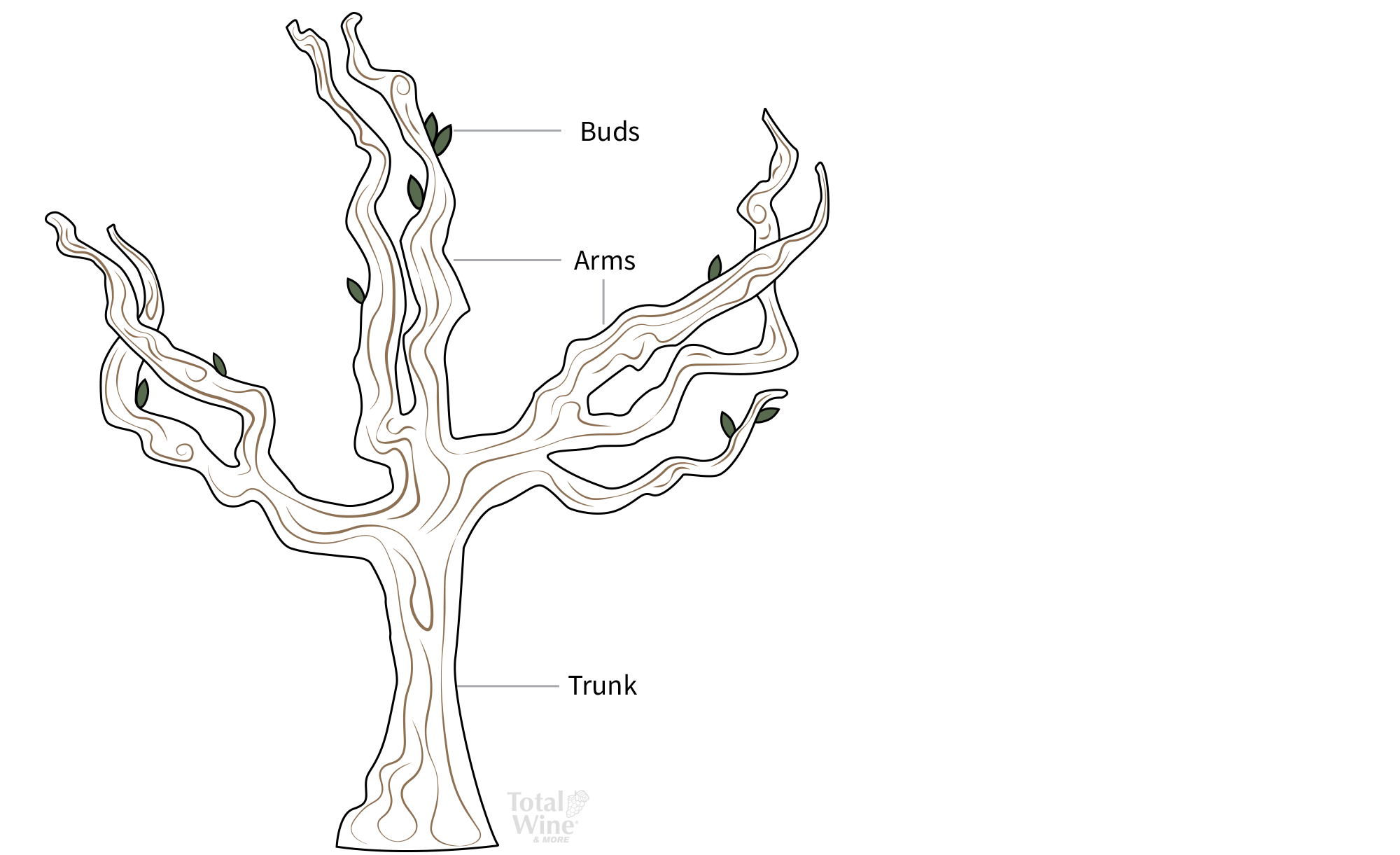
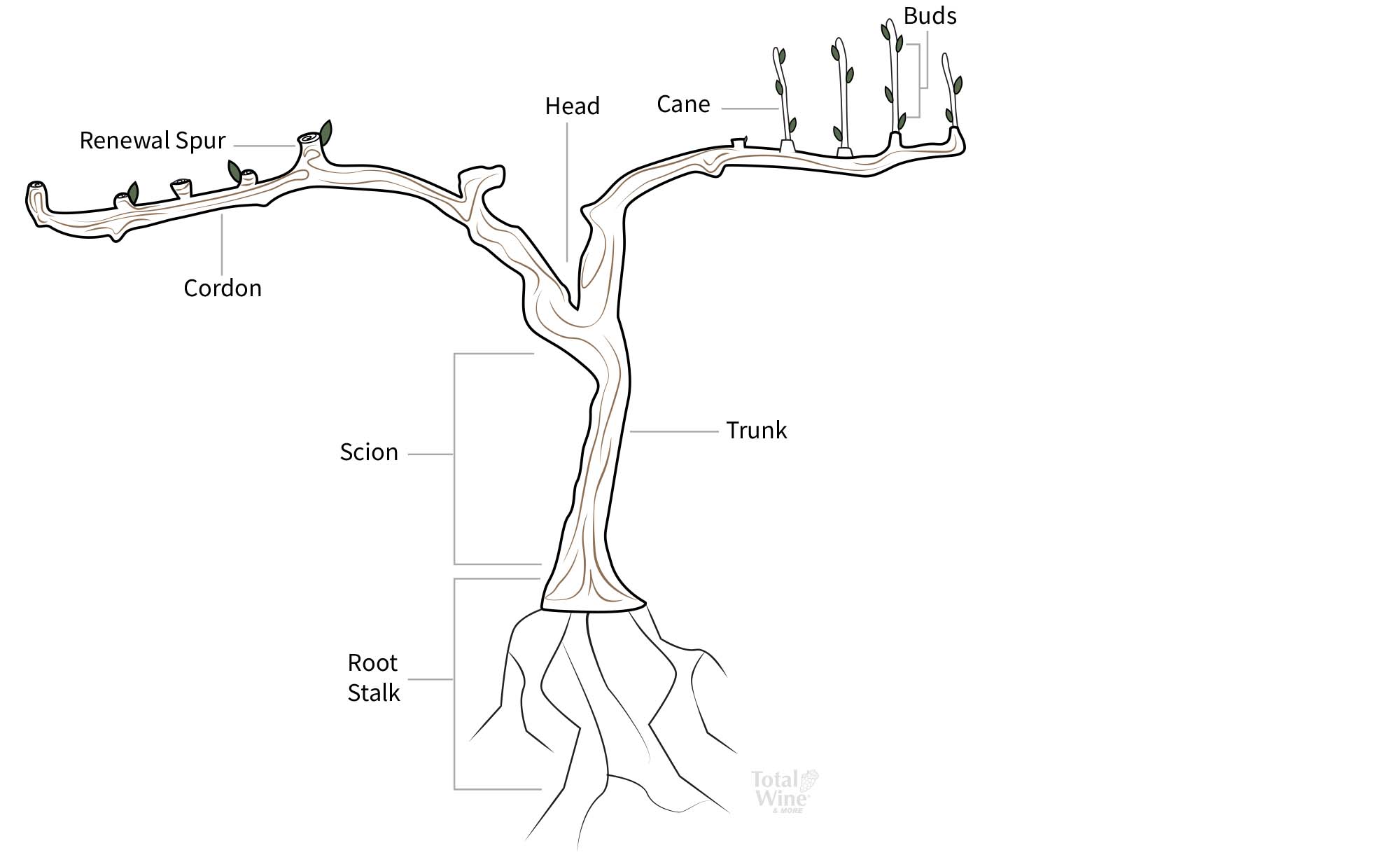
This is an old-fashioned way of planting a vineyard, and many heritage vineyards feature free-standing vines with wild, woody branches or spurs coming out of the center. This system is used in the warmer vineyard regions, such as Beaujolais, the Rhône, the south of France, and Spain. In California, you’ll see this kind of vineyard in Lodi, Paso Robles, and in specific blocks of the To Kalon vineyard Robert Mondavi Winery in the Napa Valley. Some drawbacks of this planting style are poor air circulation, which can lead to mildew, and the low-to-the-ground vines are subject to frost.
Cordon spur system
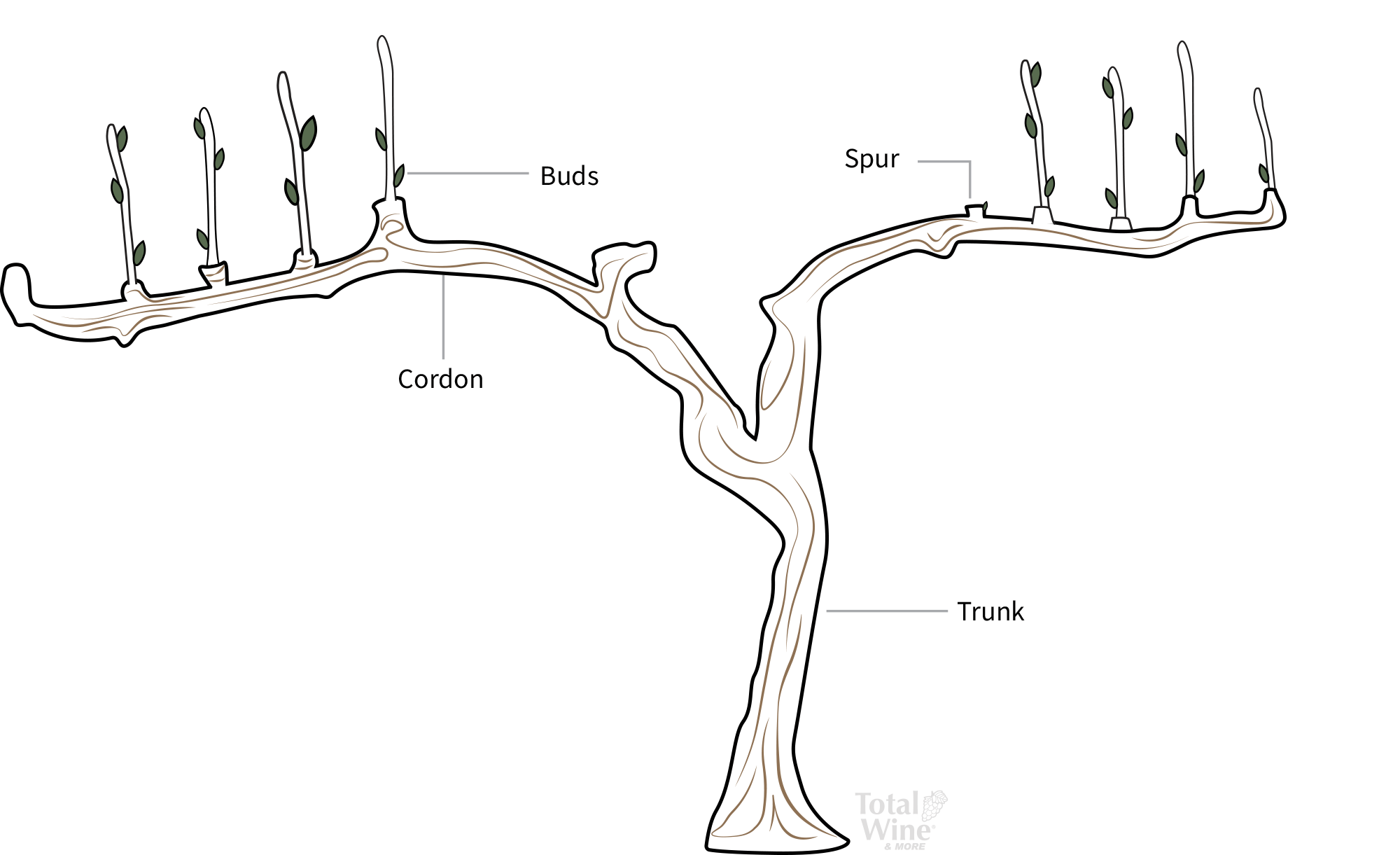
The vine’s trunk often has two thick arms or cordons that extend right and left. The new growth comes from little spurs that line the cordons attached to the trellis’ horizontal fruiting wire. This method is most often used in vineyards fully adapted for mechanization.
Cane pruning system
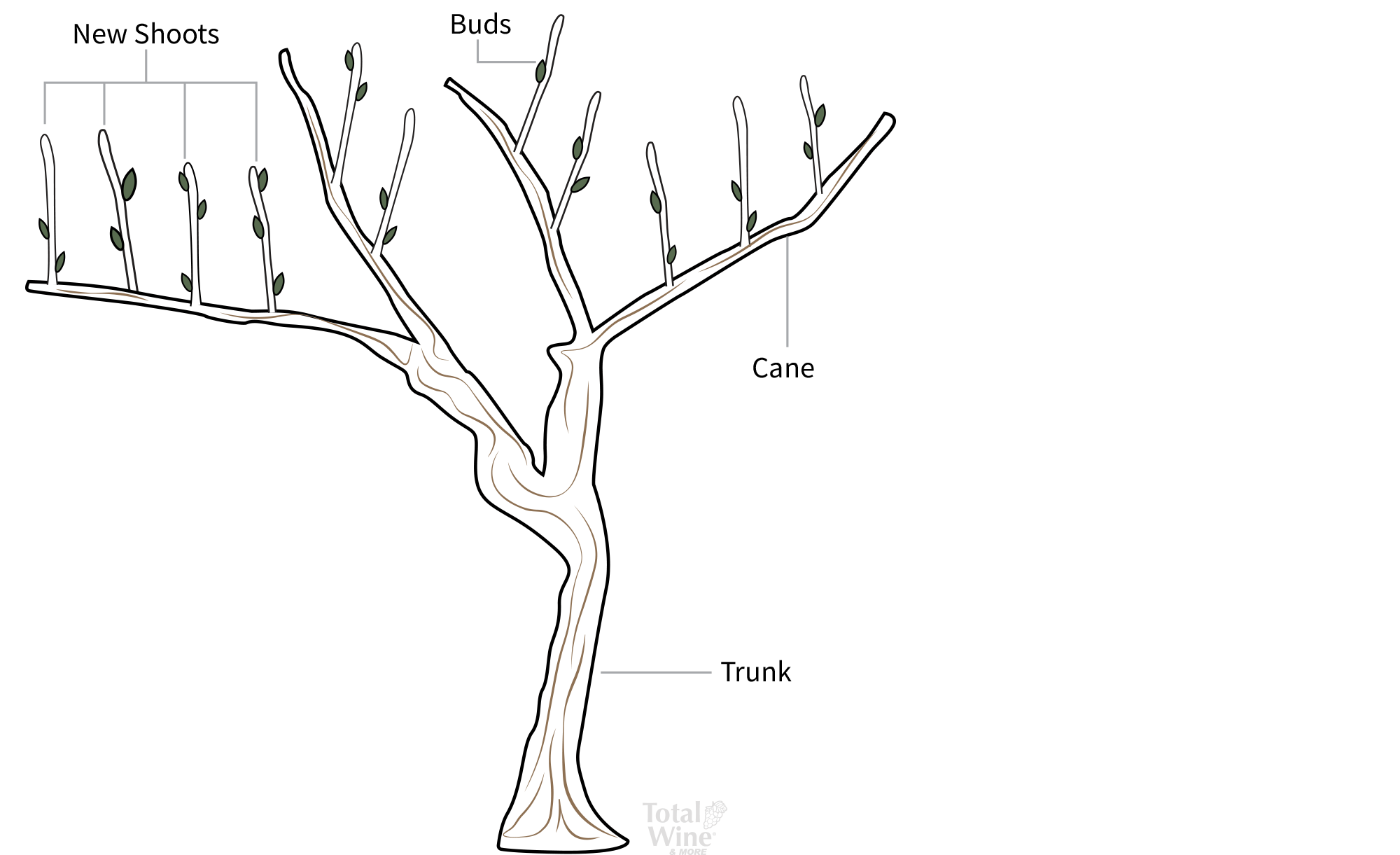
In this system, the thickest part of the grapevine is the trunk. One or two slender canes growing from the top bear all the leaves and fruit. The vines must be pruned carefully to leave the canes most likely to bear fruit in this system. These canes are attached to horizontal fruiting wires on the trellis.
Lyre or Y Trellis
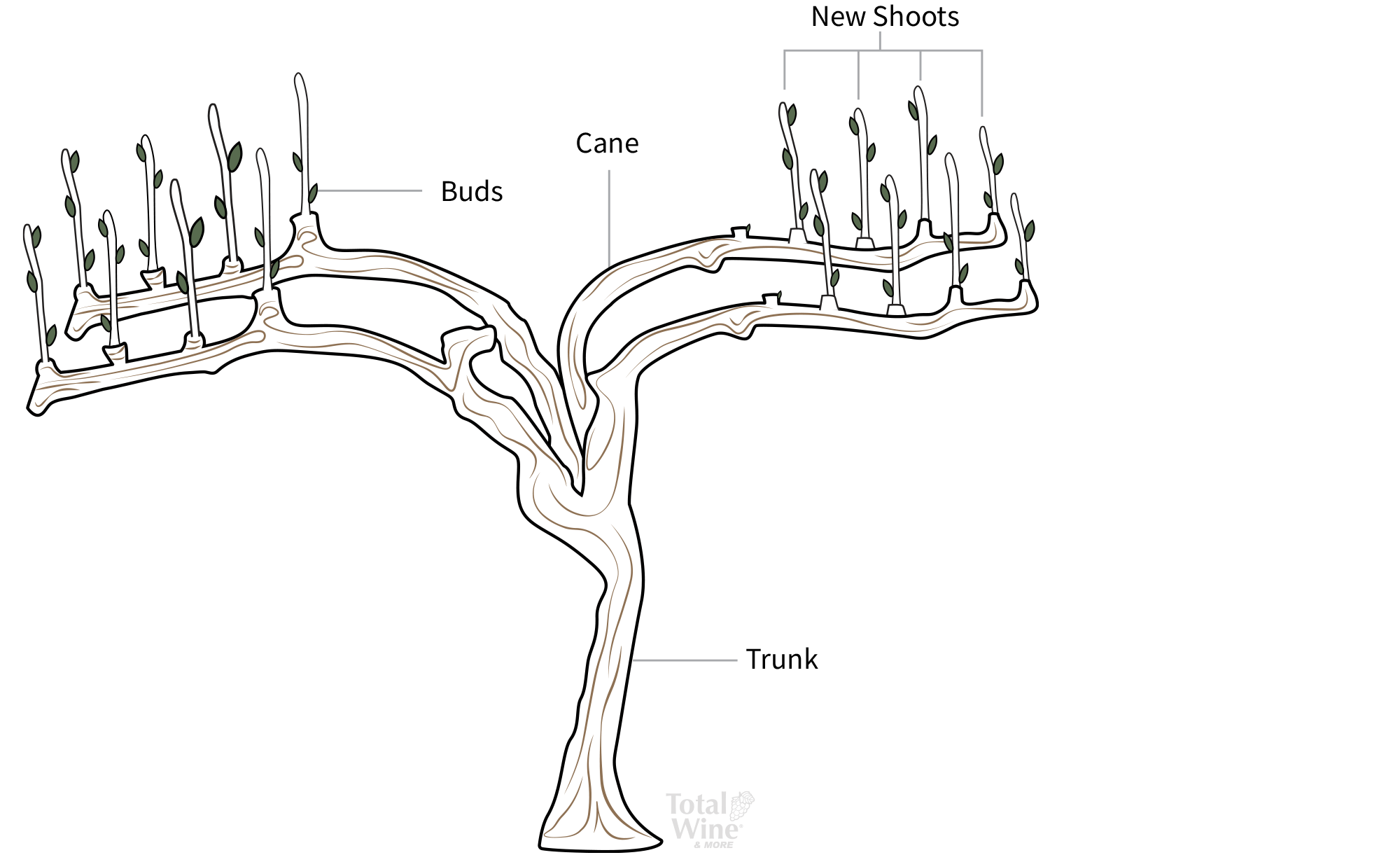
In this style, the vine has two main cordons or arms growing parallel. Each of those cordons is split in two again and has shoots growing vertically from it. This style maximizes space shields clusters from harsh sunlight while keeping vigorous vines from growing too fast. The trellis center used to support the vine looks like a lyre, an ancient musical instrument beloved by mythical centaurs.
If you’d like to know more about wine tasting 101, check out our guide to wine tasting.