
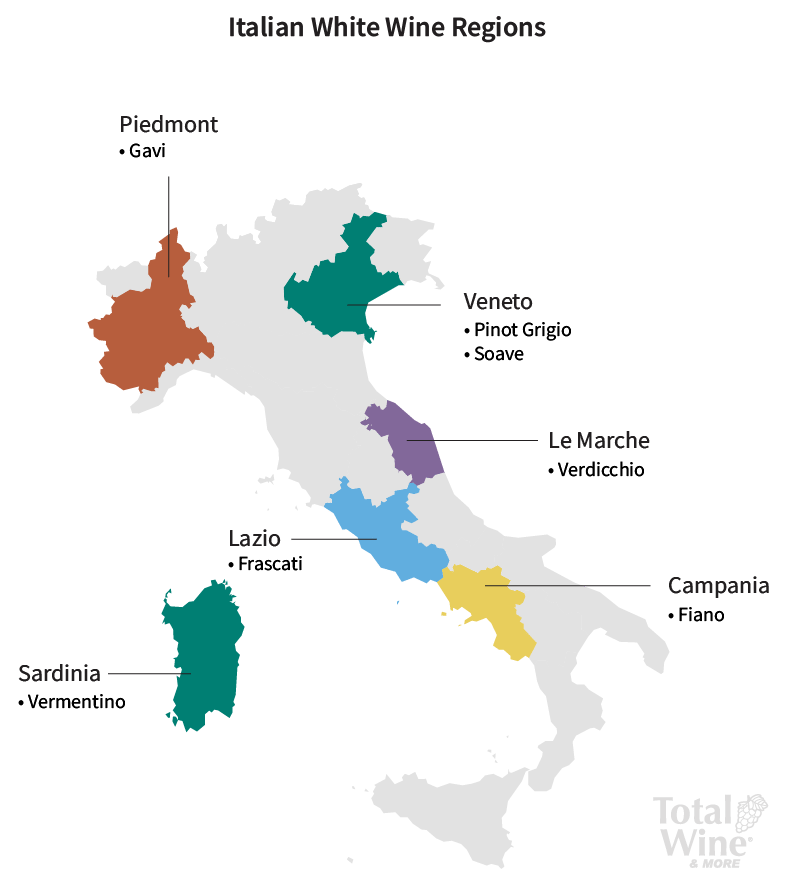
Italy is home to more indigenous grape varieties than any other country — and Italy produces more wine than any other country, including France. While most people are familiar with red Italian wines, such as Chianti, Barolo, and Barbaresco, white wines of Italy should not be overlooked. Pinot Grigio, Prosecco, and Moscato are the wines that probably first come to mind, but there are many other styles to explore. If you’re unsure of where to start, look no further. We compiled a list of seven Italian white wines to get you started.
1. Pinot Grigio
One of the most famous white wines of Italy is, in fact, not Italian. Pinot Grigio grapes were brought to Italy in the 19th century from France, where it is known as Pinot Gris. They thrived in northern Italy in the Veneto region, where they are still grown. The three key regions to seek out Pinot Grigio from Italy include Alto Adige, Trentino, and Friuli-Venezia Giulia.
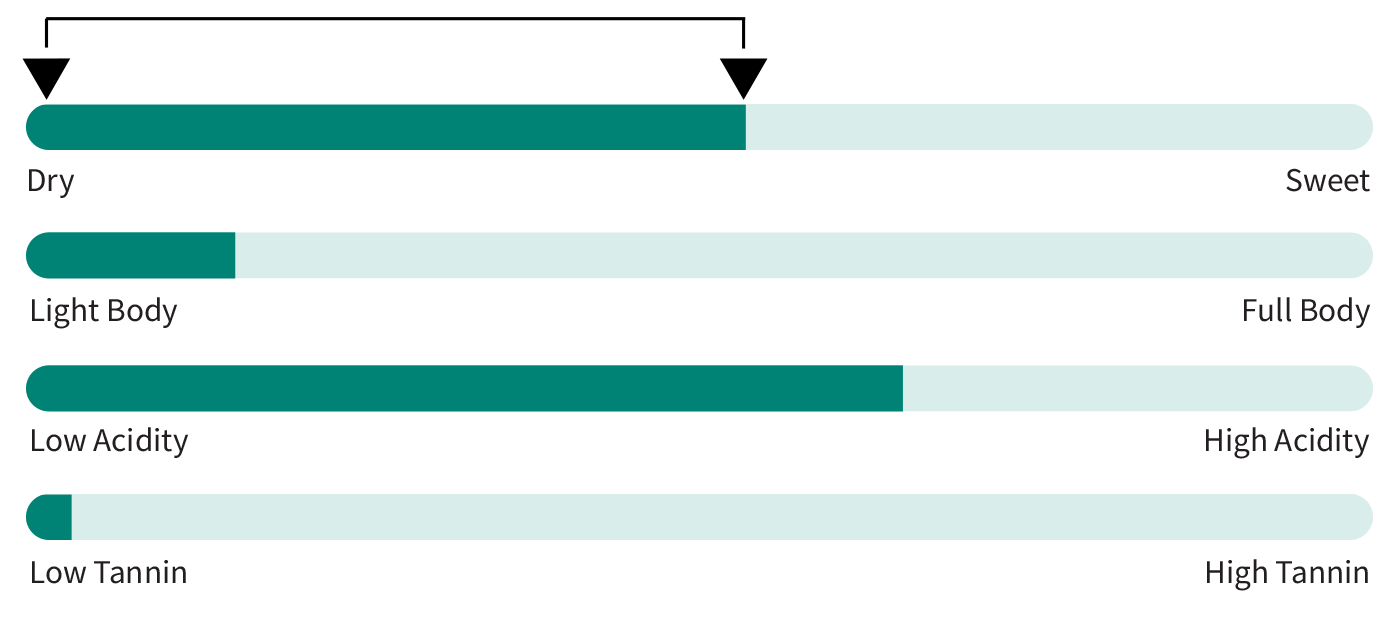
Alto Adige is Italy’s most northern wine region, where the cooler climate results in bright, crisp, aromatic wines. Trentino is located just south of Alto Adige. Pinot Grigio from here has a bit more stone fruit flavors and just slightly less acidity for an easy-drinking white wine. We move to the far northeast corner of Italy to Friuli-Venezia Giulia, where grapes are grown at the foothills of the Alps, extending out to the Adriatic Sea. The warmer Mediterranean climate results in richer styles of Pinot Grigio with more body and riper fruit flavors from peachy to tropical.
Pinot Grigio is an excellent food companion. Bright acidity is perfect for pairing lighter dishes like raw seafood and fresh salads, as well as fried calamari, antipasto, and tomato-based pasta dishes. Reach for a glass of Pinot Grigio if your dish includes peach, apricot, or orange glazes to complement the fruit flavors in the wine.
Primary Flavors:

Taste Profile:
2. Soave
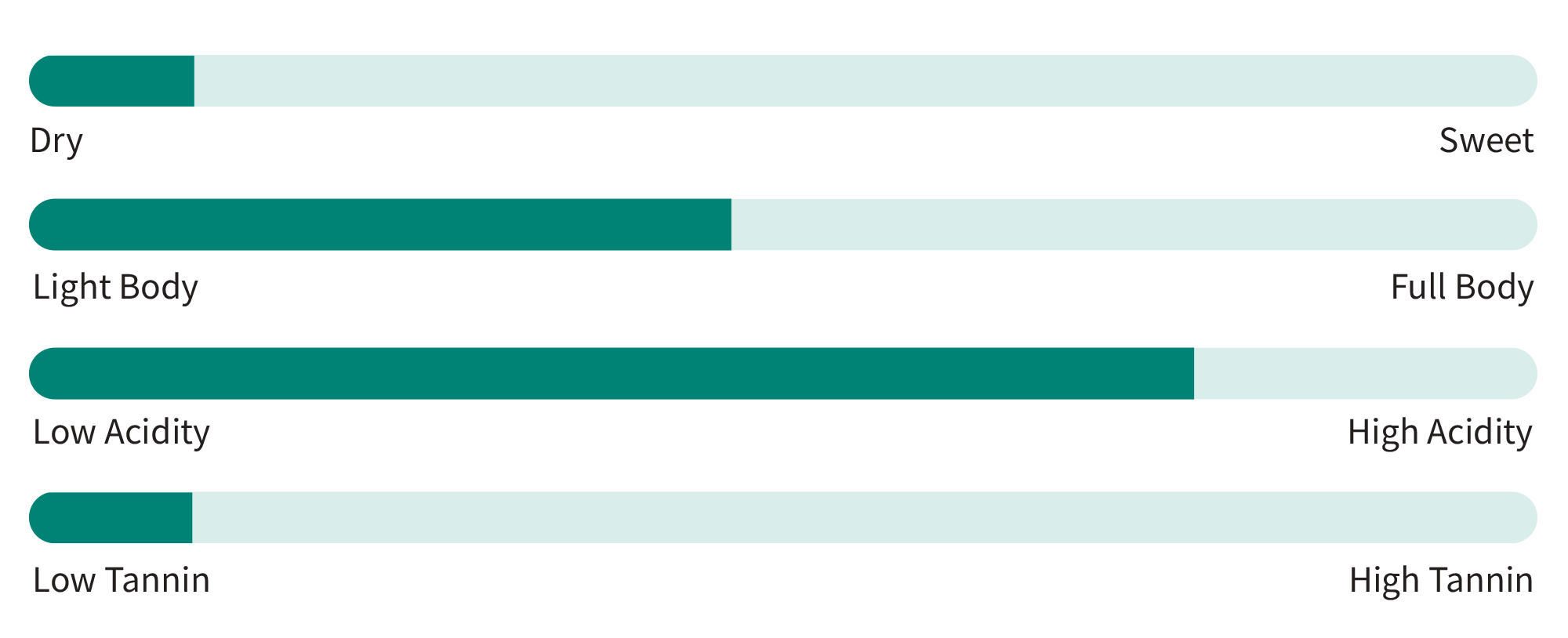
Look to the castle-lined hillside east of Verona in the western part of Veneto for Soave. These white wines must be at least 70% Garganega grapes and up to 30% Trebbiano di Soave (Verdicchio), Chardonnay, Pinot Bianco, or Sauvignon Blanc. Styles range from light and fruity to intense and aromatic, with aromas of white flowers, yellow fruits, and fresh garden herbs. With age, these wines develop peach, marzipan, and tangerine flavors.
When searching for a bottle, you may see Soave on the label or Soave Classico and Soave Classico Superiore. The Classico label signifies that the grapes were grown in the smaller original zone above the town of Soave.
Soave is perfect for pairing with light meat entrees, seafood, and tofu. It is also excellent with citrus-based sauces and dishes garnished with fresh green herbs.
Try Soave if you like Chenin Blanc or Albariño.
Primary Flavors:

Taste Profile:
3. Gavi
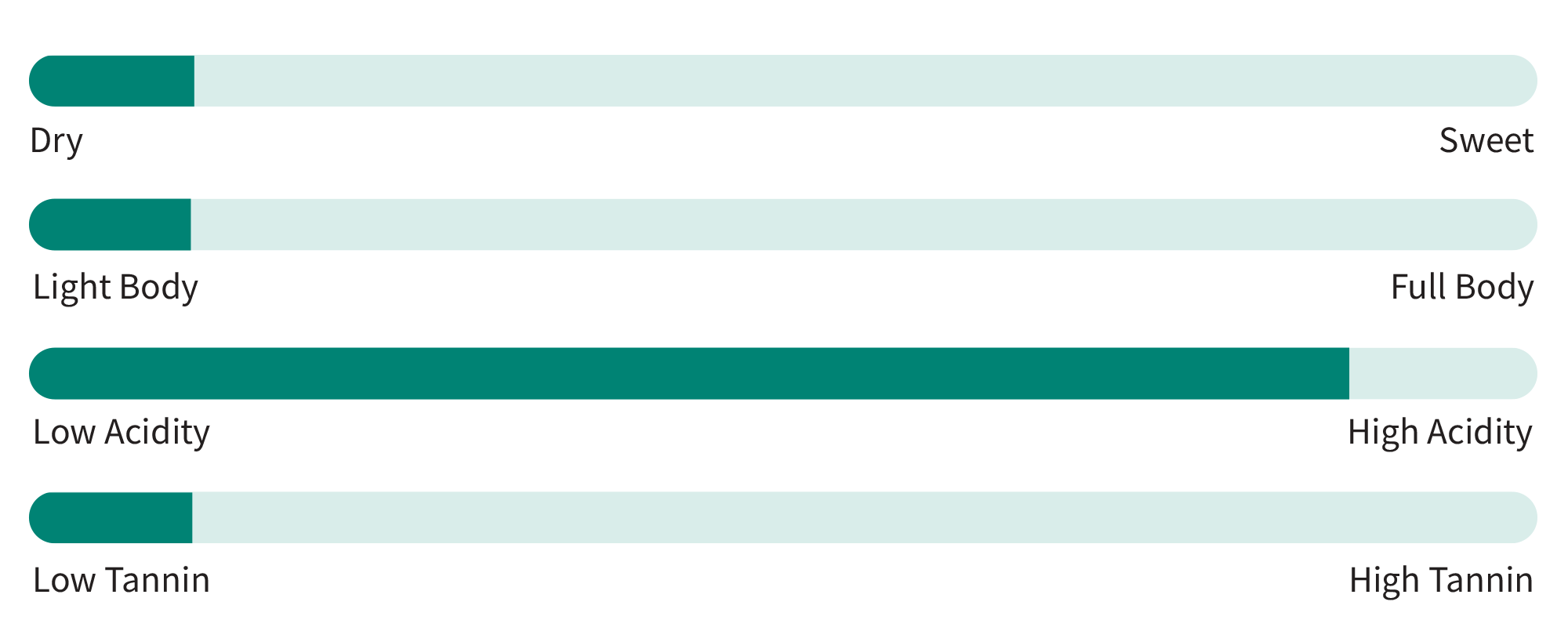
Our next Italian white wine takes us to the far western region of Piedmont, where you will find Barolo and Barbaresco. Gavi, also known as Cortese di Gavi, Gavi di Gavi, or just Gavi, is made from Cortese grapes. It is a zesty, lean white wine that is typically bone dry and crisp. Mineral and citrus notes of lime and lemon are complemented by fresh melon, peach, green apple, and grassy aromas.
Gavi is a short distance from the Ligurian Sea, making this wine a natural partner to seafood. It’s also excellent with herb-based sauces like pesto and seafood curries like Laksa.
Give Gavi a go if you are a fan of Sauvignon Blanc.
Primary Flavors:

Taste Profile:
4. Frascati
We move to the south of Rome for our next white wine. Located in Lazio, Frascati is a light-bodied, refreshing wine made from Malvasia and Trebbiano Toscana grapes. Trebbiano is the name for at least six white grape varieties grown in Italy, with Trebbiano Toscana being the most common. In France, Trebbiano is known as Ugni Blanc.
In Frascati, grapes are grown on hillsides and cooled by altitude and nearby lakes to maintain acidity and freshness. Wines exude citrus, orange blossom, peach, and green apple flavors.
Pair a bottle of Frascati with hard cheese like parmigiana, seafood pasta, white pizza, roasted chicken, sardines, and pesto.
Grab a bottle of Frascati if you enjoy unoaked Chardonnay.
Primary Flavors:

Taste Profile:
5. Verdicchio
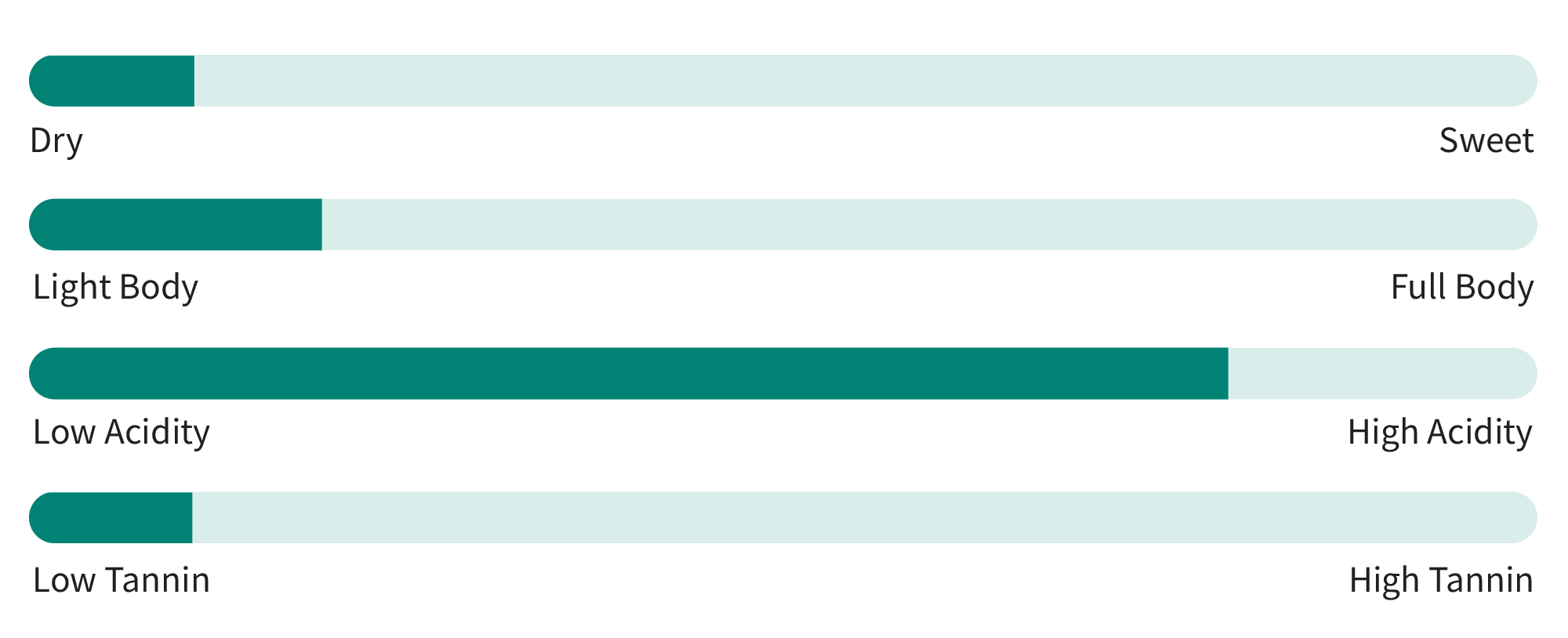
On the east side of the Apennine Mountains along the Adriatic Sea is the Le Marche region, where you’ll find wines made from Verdicchio grapes, labeled Verdicchio dei Castelli di Jesi. These wines are perfumed with peach and mandarin fruit, along with lemony acidity and a slightly oily texture on the palate.
Light body and high acidity pair wonderfully with salty prosciutto and egg-based dishes like quiche, savory souffle, and frittata, as well as seafood from prawns to delicate white fish.
Try Verdicchio if you like Pinot Gris or Sauvignon Blanc.
Primary Flavors:

Taste Profile:
6. Fiano
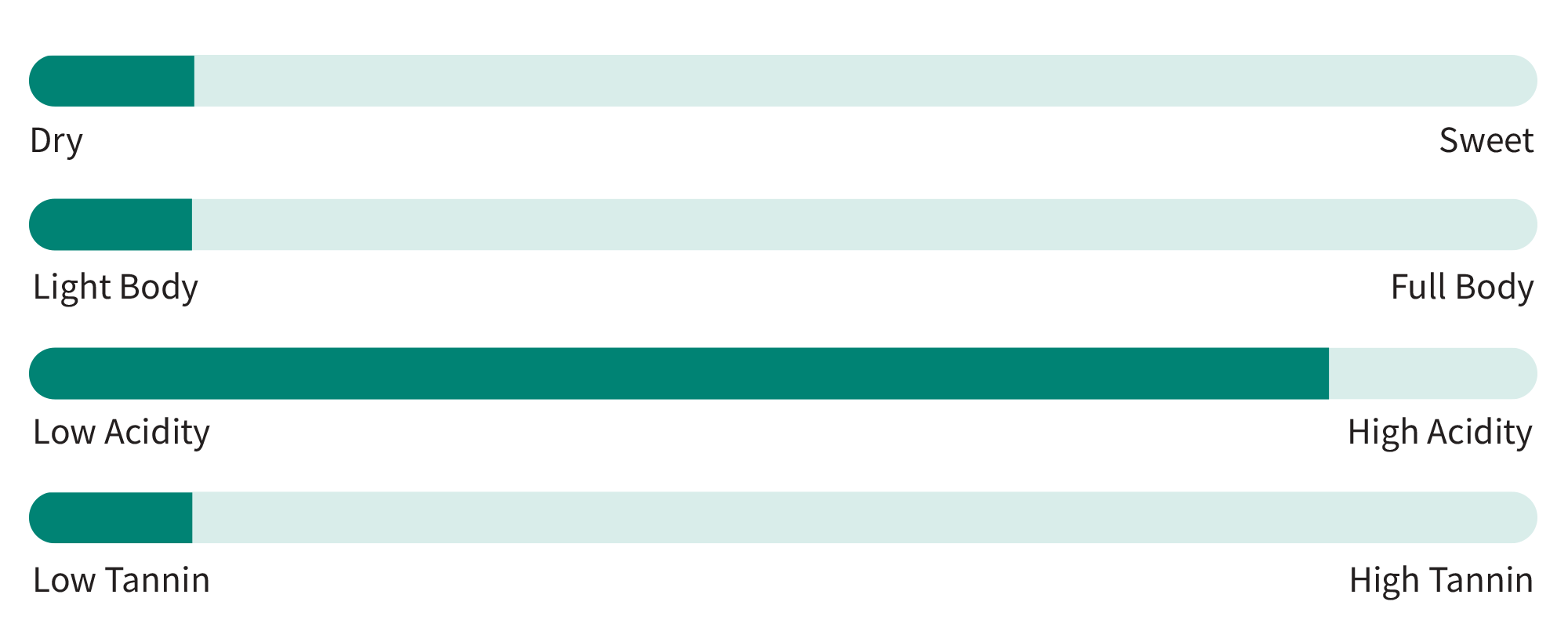
Fiano di Avellino is a rich and flavorful white wine produced in Campania, home to Naples. Grapes are grown in the volcanic soils of the Apennine Mountains, and the hilly landscape provides elevation to preserve acidity in the grapes. Fiano is not as aromatic as some other white varieties but is still full of fruit flavors from pear to honeydew melon and mango. With age, wines develop a waxy quality and honeyed flavors.
Pair a bottle of Fiano with glazed meats like orange chicken and pork belly or lighter dishes like poached fish.
Reach for a bottle of Fiano on your next shopping trip if you enjoy Pinot Grigio or unoaked Chardonnay.
Primary Flavors:

Taste Profile:
7. Vermentino
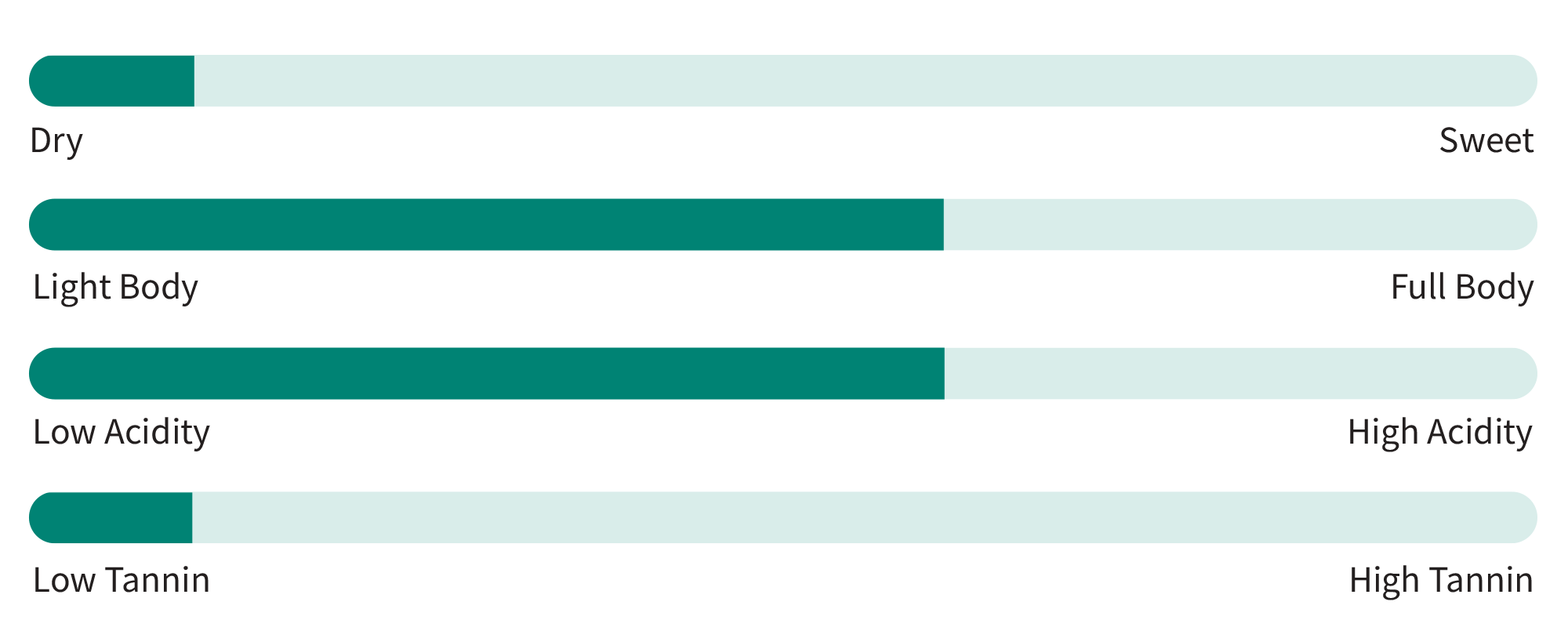
Grown near the sea on the island of Sardinia, you’ll find Vermentino di Sardegna or Vermentino di Gallura. These white wines have ripe fruit flavors of lime, grapefruit, apple, and pear, as well as herbal aromas like rosemary, sage, and dried lavender. Oak aging can add nutty qualities and body. Vermentino is also grown in Tuscany, where the warmer climate results in a fuller body, more like Viognier.
Grilled white meat, fish, and green herbal dishes like pesto are the perfect accompaniment to this white wine.
Give Vermentino a try if you usually drink Albariño or Grüner Veltliner.
Primary Flavors:

Taste Profile:
Ready to learn more about Italian wines? Check out our articles to Italian Red Wines, Italian Sparkling Wines, and Italian Wine Regions.