
Dining out at a French steakhouse with a bunch of food and wine writers, I found myself with the wine list, and the task of selecting a bottle to please everyone at the table. After scanning the wine list, I chose a mid-priced Syrah blend from the Rhône Valley. I was pretty certain that a dry red with dusty flavors of berry, cherry, and earth would be a winner — and it was.
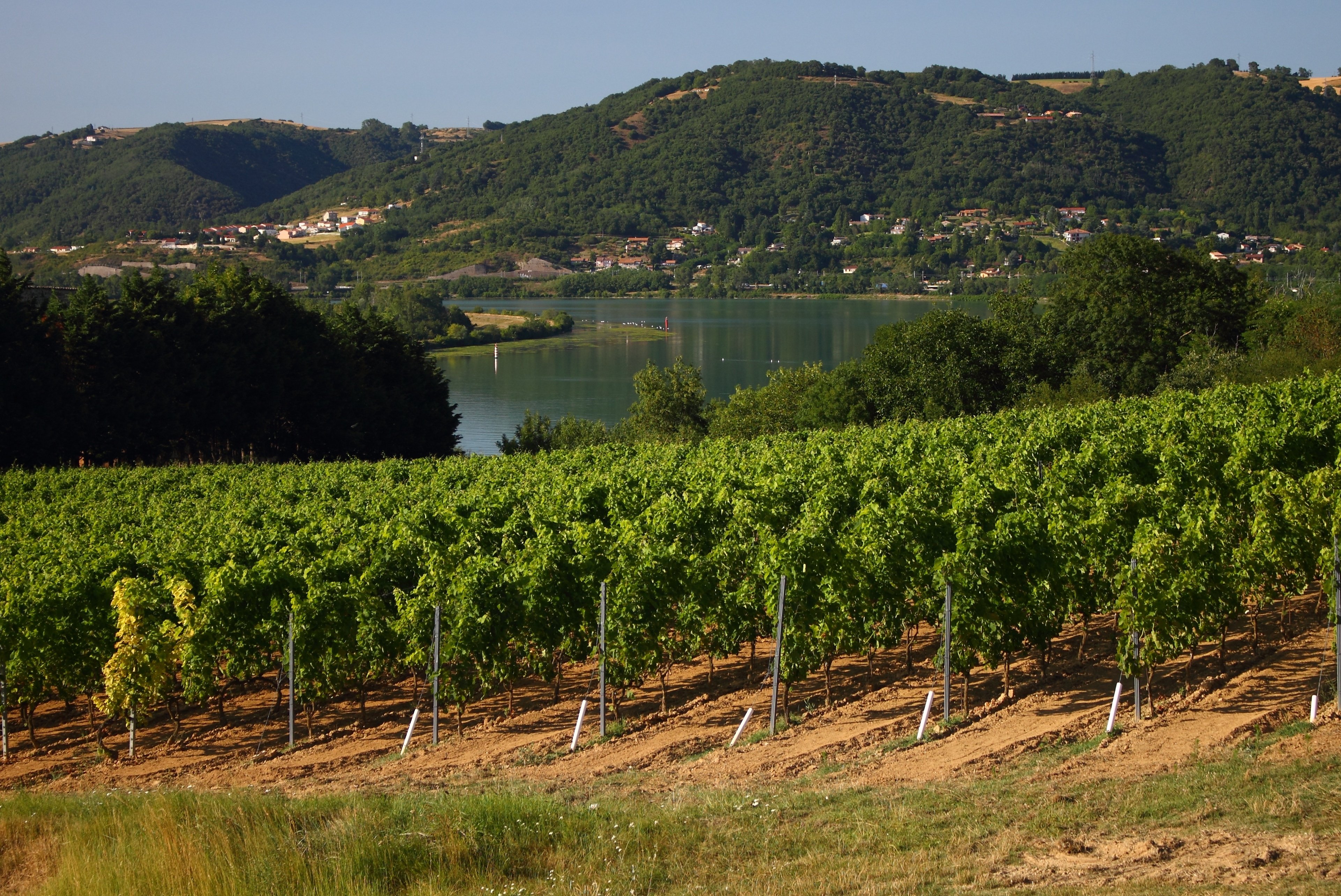
The Rhône River runs some 500 miles from its source in the Swiss Alps to the Mediterranean. Near Vienne, where the river turns from its westward progression and drops south, the Rhône’s storied winemaking areas begin. The region stretches for 150 miles, with vineyards clinging to the slopes above the river, toward the ancient town of Avignon in the south of France.
Although the Rhône is considered one vast wine region, the Northern Rhône and Southern Rhône are like two different places. They have distinctly different climates and specialize in different grapes. This guide to Rhône Valley wines will give you a tour of the major wine areas, or appellations, to know.
4 facts to know about Rhône wine
-
Syrah is the red grape of the Northern Rhône, while the Southern Rhône is focused on Grenache.
-
The Rhône is the second largest wine growing region in France, after Bordeaux.
-
In 1923, Châteauneuf-du-Pape winemakers and officials drafted requirements governing how local wine was to be produced. Those rules later served as a guideline for the creation of France’s nationwide Appellation d’Origine Controllée (AOC) system.
-
Most Rhône wines come from the south, which produces 95 percent of all Rhône wines.
Northern Rhône
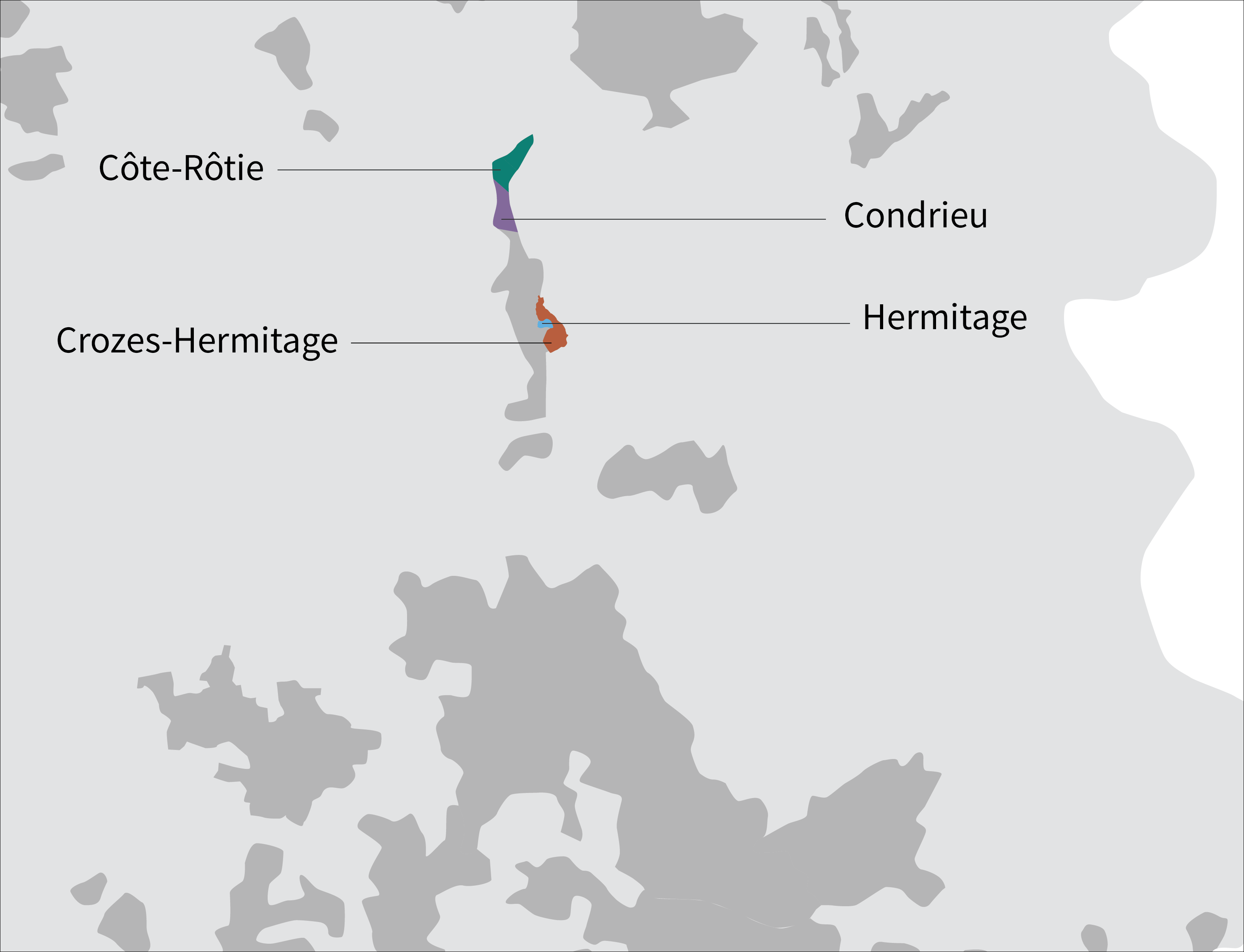
While small, the Northern Rhône includes some of France’s most prestigious appellations. Hermitage and Cornas, further south but also considered part of the northern Rhône, are likewise celebrated for their red wines. Syrah is the only red grape permitted in this area, but small percentages of white grapes are sometimes blended with the Syrah. The tiny appellation of Condrieu produces impressive white wines made from the Viognier grape.
Cote Rotie
Côte-Rôtie, or “roasted slope,” tells you what you need to know about the local climate. Here, the summer sun shines all day long on vineyards carved from rocky hills, producing fully ripe grapes and tannic, concentrated, age worthy red Rhône wines that can evoke everything from jammy raspberry, black olive, and chocolate to smoky bacon fat and violet.
Saint-Joseph
Jesuit priests were the ones who named this vast wine region with rocky slopes covered in grapevines Saint-Joseph. You’ll find brawny-but-elegant Syrahs with notes that remind you of meat and dark fruit, plus serene white wines made from Marsanne and Roussanne.
Hermitage
Syrah from Hermitage was once the most prized and expensive wines in all of France; in fact they were the official wines of two French kings. Fruit grown on Hermitage Hill creates powerful red wines that smell and taste of red fruit, lleather,rand coffee beans. La Chapelle, sourced from top vineyards in the region, is one of the most famous Hermitage wines. Syrah and Viognier are sometimes planted together, so some wineries blend the white grape into Syrah to soften it.
Crozes-Hermitage
Like its neighbor, Crozes-Hermitage is known for Syrah wines, but the granite soils here mean the wines are lighter than those of Hermitage. The best Crozes-Hermitage reds are quite refined with classic notes of black olive, cherry, and blueberry. White wines made from Roussanne and Marsanne offer notes of apricot, white flowers, and pear with an opulent texture that feels like cream.
Southern Rhône
The red grape Grenache, often called Grenache Noir, is the star of the Southern Rhône. Wineries in the villages and towns in the famed Côtes du Rhône appellation produce about half of the Rhône region’s wine. Ninety specific villages may use the Côtes du Rhône-Villages appellation on their wine bottles, signifying their special reputations. Though the southern Rhône produces red, white, and rosé wines, most of the region’s wines are blends of three red grapes: Grenache, Syrah, and Mourvèdre, called a GSM blend for short.
Châteauneuf-du-Pape
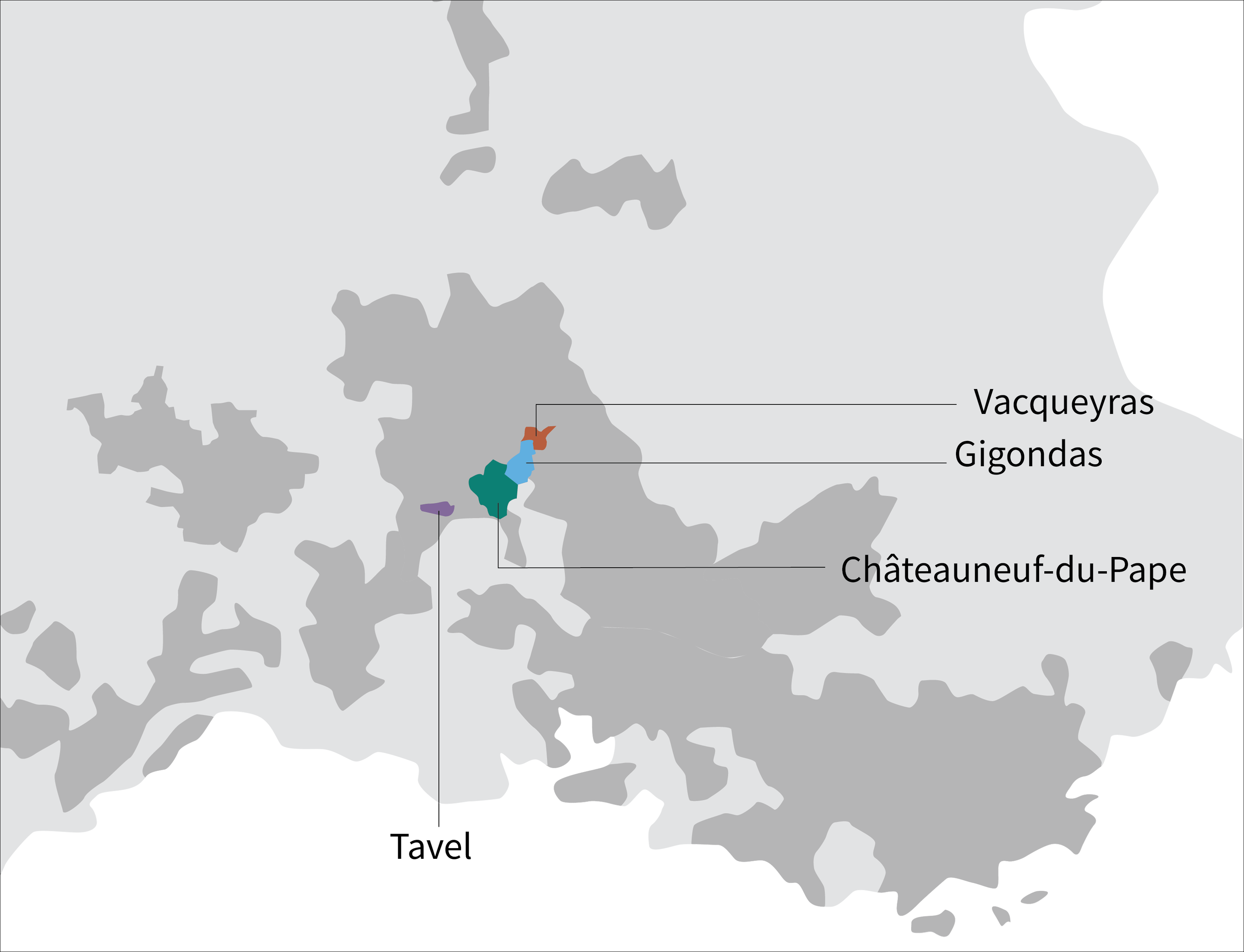
This notable appellation is named for the castle built by Pope John XXII during his 14th-century residence in Avignon — literally his new castle. But for visitors, the most striking thing about Châteauneuf-du-Pape is the smooth oval rocks that cover the surface of the vineyards. They absorb heat all day and release it at night, which helps fruit ripen. Reach for a CDP red wine if you want a rich and full-bodied wine full of dark fruit, olives, leather, herbs, and big tannins.
Gigondas
The wines of this hot, windswept region have developed a cult following for their bold rustic bold character that reveals red fruit like raspberry and cherry, blueberry, licorice, leather, and a peppery finish. By law, Gigondas red and rosé wines are 80 percent Grenache, and they’re also required to be at least 12.5 percent alcohol, so they’re not shy.
Vacqueyras
While it’s not as famous as Gigondas or Châteauneuf-du-Pape, Vacqueyras produces a range of Grenache red wines that can be juicy and easy to drink or more robust and rustic with flavors of red raspberry and cherry, black olive, smoke, earth, and spice. The good news is that Vacqueyras wines are a great value. The region is also known for GSM rosés that are dry and subtly fruity, as well as Muscat de Beaumes de Venise, a fortified sweet wine.
Tavel
Rosé all day is the mantra in this part of the Rhône: by law, all Tavel wines are rosés. And these rosés must be made from red grapes like Grenache and Cinsault, so they’re luscious wines with aromas and flavors of strawberry, ripe cherry, violet, mixed with minerality and bright acidity.
We hope this article on the varied and delicious wines of France’s Rhône Valley inspires you to explore more of this region. For more ideas, check out our guide to French wine regions, Syrah guide, and best Rosé wines.