
If you’re a US wine lover, you probably started drinking California wines. But did you ever stop to think about where your favorite California Chardonnays and Malbecs originated? Most US wine is inspired by European regions known as the “old world.” “Many wine grapes originated there, and people have been perfecting grape cultivation, winemaking techniques, and blends for over 1,000 years,” says Christopher Gaither, a Master Sommelier. He co-owns the wine-focused San Francisco restaurant Ungrafted with his wife, Rebecca Fineman, MS.
When curious explorers from Portugal, Spain, England, and France looked for riches across the ocean, they called North America, South America, Australia, and the Caribbean the “new world.” Of course, those places and people weren’t lost, but this was new territory for the Europeans.
European immigrants brought grapevines to the new world and created wines inspired by their old-world favorites. And US winery owners purchased grapevine cuttings from France and Italy, or pinched their own from famous vineyards and smuggled them home in their suitcases. Use these tips to find great bottles from old world wine regions similar to the best new world wines from South America, California, and Australia.
What is old world wine?
Old world wine regions have been making wine for a millennium. They’ve perfected grape cultivation and determined which grapes grow best on different soils. Croatia, Italy, France, Greece, Spain, and Portugal are in wine’s old world. Geographic area names like Champagne, Rioja, and Pfalz act as brands, and wineries must follow local laws on which grapes can be planted to use those famous names.
What is new world wine?
Making wine in new world regions like the US, Mexico, South America, Australia, New Zealand, and South Africa is exciting because there are relatively few rules. “There’s way more experimentation in the new world,” says Gaither. Here, vintners can grow whatever varieties they like and make novel blends and styles. And while they’ve been making wine in South Africa for nearly 400 years, it’s part of the new world because winemaking styles are still evolving.
Old world vs. new world wines
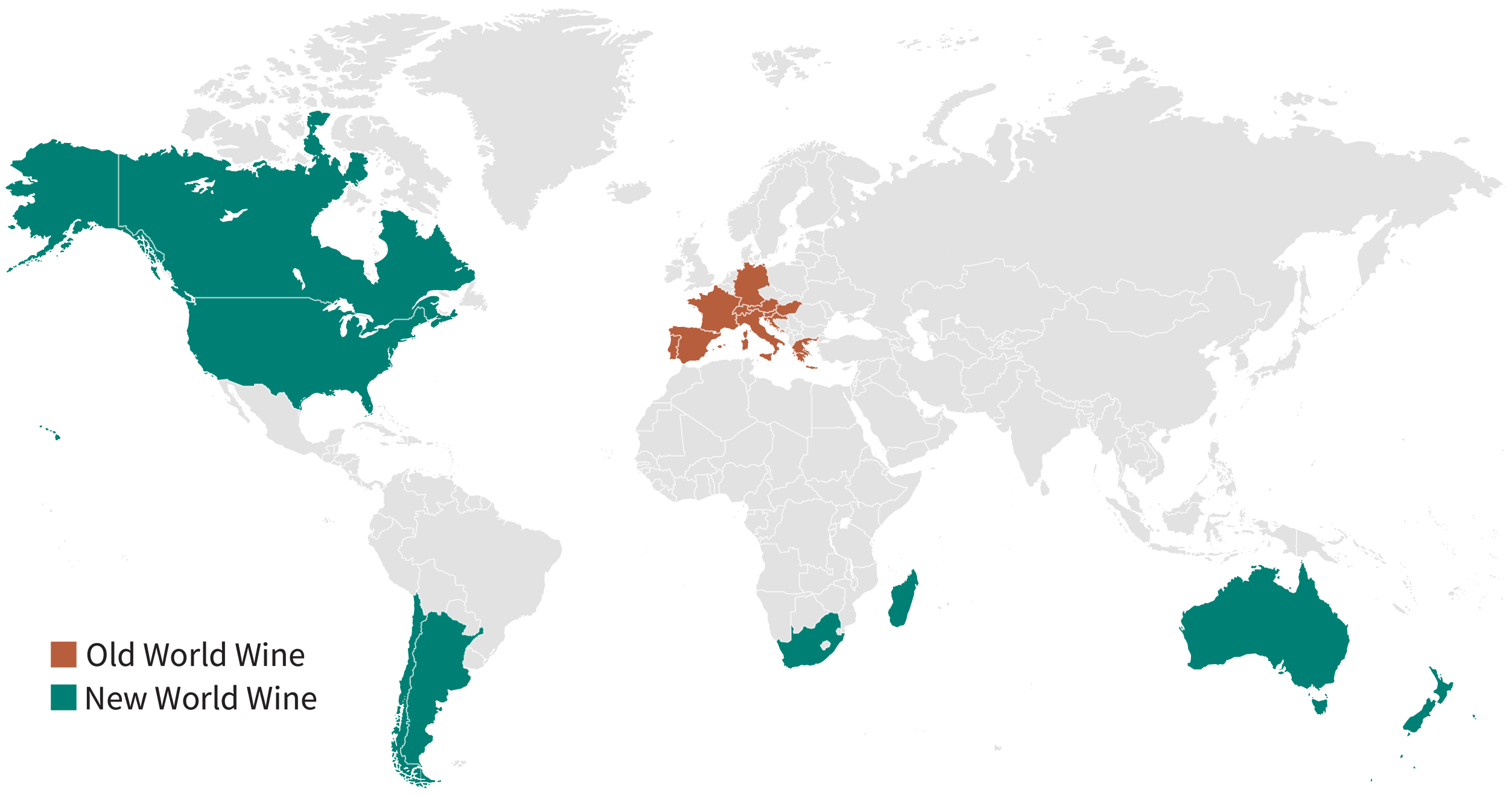
There are a few key differences between old world and new world wines. New world regions are sunnier, so the grapes are riper, creating fruitier wines with more alcohol. Most old world areas are colder, so the wines are lighter, and focused on acidity and earthiness. And finally, new world wines celebrate the name of the grape on the label, while old world wines are named for the village or region where the grapes were grown instead.
If you like this new world wine, then try this one from the old world
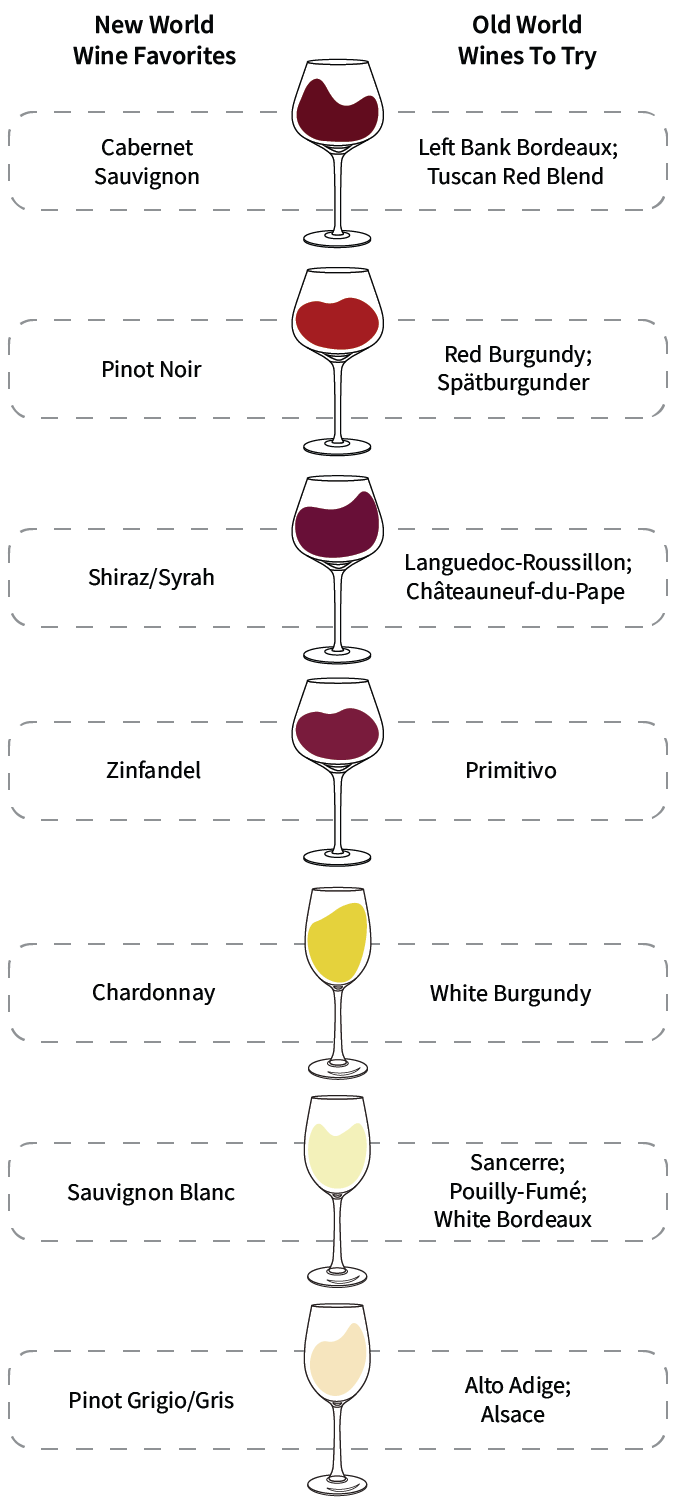
There’s an old world wine that will hit the same buttons as your favorite new world wine, though the wines won’t taste identical. So be sure to take this handy chart along next time you go wine shopping.
If you like Cabernet Sauvignon
Few old world wines can match the potent combination of fruit, tannins, and alcohol in brawny Napa Valley Cabernet Sauvignons from Oakville, Howell Mountain, and Diamond Mountain. Look to Bordeaux’s Left Bank for wines from Medoc, Pauillac, Margaux, and St-Julien for old world Cabs that pair elegance and power. And in Italy’s Tuscany region, you’ll find elite Cabernet Sauvignons with fanciful names like Ornellaia, Sammarco, Sassicaia, and Solaia.
If you like Pinot Noir
New world Pinot Noir can range from bold to delicate and floral. If you like more structured Pinot Noirs with supple tannins and fruit, look for red Burgundies from Gevrey-Chambertin, Nuits-St-Georges, and Marsannay. For sheer, perfumed Pinots like those from Oregon or the coldest parts of Sonoma Coast, try wines from Volnay and Chambolle-Musigny in Burgundy or Germany, where Pinot Noir is labeled Spätburgunder.
If you like Shiraz
The Shiraz grape’s other name is Syrah, a grape beloved across France. For lighter old world Syrahs, look to Corbières and Minervois in Languedoc-Roussillon. For brawny wines with dark fruit, olives, leather, herbs, and big tannins, head to Châteauneuf-du-Pape in the southern Rhône. Nearby, in Gigondas and Vacqueyras, Syrah is mixed with Grenache and Mourvedre in blends with blue and black fruit, spice, and chewy tannins.
If you like Chardonnay
California Chardonnay comes in many styles, but most have a European counterpart. If you like the crisp, unoaked Chardonnays, look for mineral, citrusy wines from Chablis, Beaune, or Saint-Aubin in Burgundy. For a richer old world Chardonnay, check out wines from Chassagne-Montrachet, Puligny-Montrachet, and Meursault.
If you like Sauvignon Blanc
If you like zesty, green New Zealand Sauv Blanc, you’ll appreciate Sancerre from the Loire with notes of gooseberry, green apple, and lime. If California Sauv Blanc is your go-to, look for complex Pouilly-Fumé, also from the Loire, and white Bordeaux blends of Sauv Blanc and Semillon. These aromatic wines are delightfully citrusy, mineral, and floral.
If you like Pinot Grigio
If you like Pinot Grigio from Oregon or California, pick a refreshing wine from Italy’s Alto Adige with notes of golden apples, sweet-tart candy, and a hint of white flowers. Alsace is known for luxurious Pinot Gris with deep flavors of stone fruit, minerals, and smoke.
If you like Zinfandel
Zinfandel is uniquely American, and no other wine country makes a wine called Zin. But America’s Zinfandel shares identical DNA with Croatia’s Crljenak Kaštelanski grape and Italy’s Primitivo. New World Zin is more plush, jammy, and berry-forward, while Primitivo is more earthy and tannic with hints of blackberry and pepper.
If you enjoyed exploring these old world wines with new world counterparts, check out these guides to wines similar to Cabernet, Merlot vs. Pinot Noir, and Chardonnay’s many tastes.